Photo Contest
Meet the Winners of the BAUHAUS4EU Student Photo Contest First Edition!
First Place

"Invisible Forces" by Babette Bachofner (Student at Unviersité Lumière Lyon 2)
This elegant staircase symbolizes movement (students walking on it) and encircles a space to pause and create.This piano is more than an object; it's an invitation. An invitation to transform stress into artistic expression.And where individuals from every discipline can be united.This piano can serve as an invisible force binding people together.The beauty isn’t just in the architecture or the instrument alone,but in their dialogue. People can sit, stand or walk to hear the rythm of campus life.
Second Place

"Different stories, one desk" by Anastasia Barmpetaki (Student at University of Macedonia)
Different students and stories around the library’s desk. Each one with their own interests, mindsets, social backgrounds.. Education, knowledge and ambition, connected their paths This welcoming environment gave them ground to unite their dreams and efforts for a brighter tomorrow. Each one of them is doing something different but hoping for the same thing. To achieve their desired goals..to have the courage to share a desk with their colleagues... “Tomorrow” will be beautiful for each one.
Shared Third Place
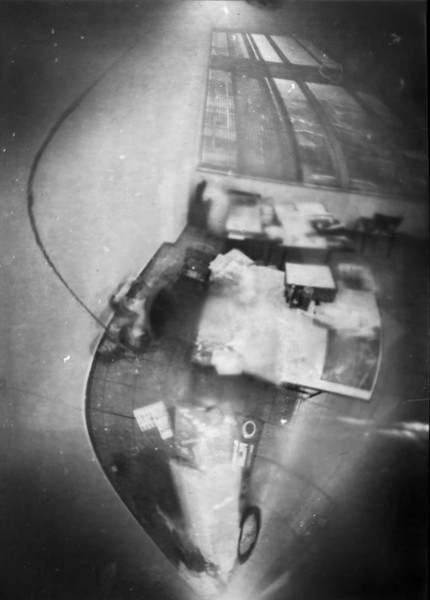
"Final round, Fight" by Sofiya Dimitrova (Student at University of Architecture, Civil Engineering and Geodesy)
the other day I found out there are slots for the cleaning ladies at uni (the contract with the cleaning company is for places taken, not people hired) personalities don't matter here at the photo can (or not) be followed 3 (three) cleaning ladies on the verge of a nervous breakdown, fighting for their lives (final state exam) ps: eventually, we get our faces back.
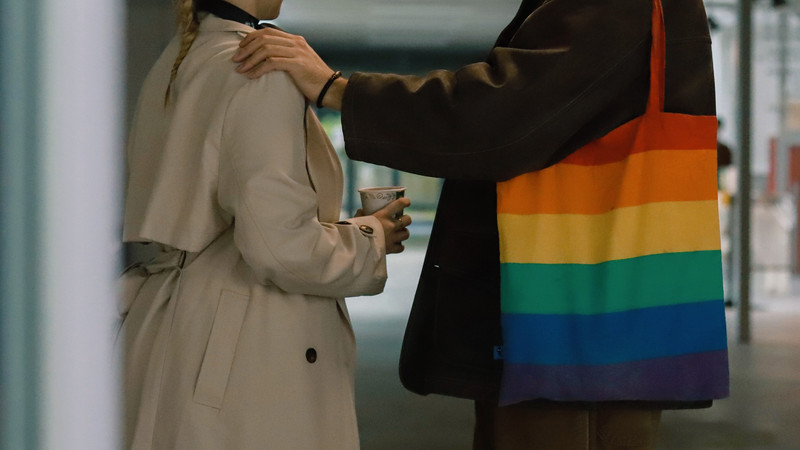
"The University of Connection" by Colleen Nourtier (Student at Université de Picardie Jules Verne)
My photo illustrates inclusion in the foreground and resilience in the background through this interaction between two students. The hand on the shoulder expresses kindness, while the rainbow bag symbolises diversity and commitment. For me, university is above all a place for human relationships, where differences meet and support each other.
1st BAUHAUS4EU Photography Contest for Students
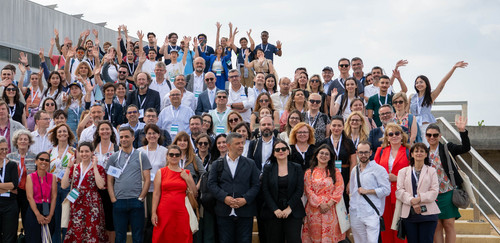
We are inviting all students from the BAUHAUS4EU universities to unveil their talents and inner perceptions of their study surroundings through photography. We challenge you to look beyond surface aesthetics, carefully observe, capture and reveal the often-invisible forces that bind people together: spaces, moments, and relationships. Our Jury consists of professionals from all ten BAUHAUS4EU full partner universities and our associated partner from Charkiw, Ukraine, who will review the entries and select the winning photographs and stories.
"Inclusive Grounds: Stories of Belonging and Resilience”
The topic of the 1st BAUHAUS4EU Photography Contest focuses on how the campuses reflect our Alliance’s shared mission of resilience, sustainability, inclusivity, and beauty.
| Open Call for Student Submission: | 20 Oct – 14 Nov 2025 |
| Announcement of the three winners: | 8 Dec 2025 |
| Course of Action: | Phase I: Open Call Phase II: Each jury member picks three photographs from their own university for Phase III Phase III: Independent review by all jury members of the 30 finalist photographs |
| Prizes: | 1st Prize: participation in the BAUHAUS4EU Forum in Katowice + backpack with goodies + special campaign promoting the photo and the author + Publication across BAUHAUS4EU partner institutions’ social media + Official BAUHAUS4EU Certificate of Achievement 2nd Prize: participation in the BAUHAUS4EU Forum in Katowice + backpack with goodies + Publication on B4EU website and social media + Official BAUHAUS4EU Certificate of Achievement 3rd Prize: backpack with goodies + Publication on B4EU website and social media + Official BAUHAUS4EU Certificate of Achievement |
Take a picture and tell us your story of inclusion, care, and belonging!
General Specifications
- Be enrolled as a student for the academic year 2025–2026 in one of the following partner universities: Université Lumière Lyon 2 (ULL2), Bauhaus-Universität Weimar, University of Economics in Katowice (UEKat), University of Bergamo (UniBg), Polytechnic University of Castelo Branco (IPCB), University of Architecture, Civil Engineering and Geodesy (UACEG), Polytechnic University of Tirana (POLIS), University of Macedonia (UoM), Blekinge Institute of Technology (BTH), Université de Picardie Jules Verne (UPJV), or Simon Kuznets Kharkiv National University of Economics (KhNUE).
- Students are required to submit their work using their own official university email address. Submissions sent from personal or non-university email accounts will not be accepted and will result in disqualification.
- Each participant can submit one (1) entry photo for one of the four categories resilience, sustainability, inclusivity or beauty.
- Photos must be original, unpublished works created by the participant.
- Each photo file name must include the (short version of the) photo title, name of the author, category, date taken, (example: quiet joy_Kim Smith_inclusivity_17102025.jpg) and a brief description (max 100 words) as part of the submission form provided under "How to Submit".
Technical Specifications
- Photos should be submitted in high-resolution digital format (minimum 300 dpi, JPEG)
- Maximum file size per image: 5 MB.
- Color or black-and-white images accepted.
- Minor digital editing is allowed (color correction, cropping, etc.), but no heavy manipulation or compositing.
Judging Criteria
Entries will be evaluated based on:
- Relevance to the theme.
- Creativity and originality.
- Technical quality (composition, lighting, focus).
- Emotional and narrative (storytelling) impact - how the photo tells a story that connects with others.
Submission Form
All students are required to submit their official photographs using their university-issued email addresses. Submissions sent from personal email accounts (e.g. Gmail, Yahoo, Outlook) will not be accepted or acknowledged. Students must ensure that all submissions are made via the designated institutional email addresses listed below for each partner university:
| Bauhaus-Universität Weimar | bauhaus4eu[at]uni-weimar.de |
| UEKat | bauhaus4eu[at]uekat.pl |
| ULL2 | bauhaus4eu[at]univ-lyon2.fr |
| UniBg | bauhaus4eu[at]unibg.it |
| IPCB | b4euphotocontest[at]ipcb.pt |
| UACEG | bauhaus4eu[at]uacg.bg |
| POLIS | bauhaus4eu[at]polis.al |
| UoM | bauhaus4eu[at]uom.edu.gr |
| BTH | bauhaus4eu[at]bth.se |
| UPJV | bauhaus4eu[at]u-picardie.fr |
| KhNUE | bauhaus4eu[at]hneu.net |
Theme: “Inclusive Grounds: Stories of Belonging and Resilience”
In today’s rapidly transforming world, spaces are no longer just physical containers - they are living ecosystems of interaction, care, and transformation. The photo contest under the theme “Inclusive Grounds: Stories of Belonging and Resilience” invites students from the ten BAUHAUS4EU Universities and from diverse fields -arts and humanities, social sciences, economics, management, architecture, engineering, design, and information and communication technologies- to turn their cameras toward the spaces, moments, and relationships on their campuses that embody inclusion, care, and collective transformation.
The photo contest “Inclusive Grounds: Stories of Belonging and Resilience” turns its gaze to the university campus as a living environment, a place where people from diverse cultural, social, and disciplinary backgrounds come together not only to learn, but to live, interact, and co-create. Campuses are not just physical spaces; they are dynamic landscapes where architecture, nature, and community intersect to shape daily experiences of inclusion, care, and belonging.
Students are encouraged to explore how the spaces of their universities -classrooms, libraries, labs, dormitories, cafeterias, gardens, hallways, courtyards- become grounds for resilience, sustainability, inclusivity, and beauty. How do these everyday environments support well-being, foster collaboration, welcome difference, and create moments of shared purpose; from student initiatives and intercultural encounters to accessible design and sustainable practices, the campus becomes a stage where the values of BAUHAUS4EU come alive, not just as ideals, but as lived realities visible in the textures, relationships, and rhythms of academic life.
The photo contest asks participants to look beyond surface aesthetics and capture the often invisible forces that bind people together like: a bench designed for conversation, a ramp that signals welcome, a moment of quiet support between strangers, or even a youth group reclaiming space for expression and voice. Finally, it calls on students to become visual storytellers of their own environments. It asks them to document how their campuses, as local sites within the BAUHAUS4EU Alliance, reflect the shared mission of resilience, sustainability, inclusivity, and beauty.
Resilience
Resilience is not just about endurance; it’s about adaptation, recovery, and renewal. The photo contest aims to explore how university spaces help students and academic communities bounce back and thrive: How campuses support mental health, social connection, intercultural dialogue, and youth empowerment in the face of challenges like migration, climate change, economic hardship, or social isolation? What makes a university not only withstand adversity but transform it into a source of collective strength and growth?
Sustainability
Sustainability is understood in a broad sense, encompassing not just environmental, but also social dimensions. How do inclusive environments promote long-term well-being, intergenerational connection, and equitable resource sharing? It is highlighted that a sustainable space is one where all voices matter, and no one is left behind.
Inclusivity
Inclusivity is about creating environments where differences are not just tolerated but embraced. This means architectural and urban designs that ensure accessibility, but also social designs that foster participation, representation, and care.
Beauty
Beauty, in the BAUHAUS4EU vision, is not superficial decoration but a deeper aesthetic of meaning, connection, and purpose. Inclusive Grounds challenges participants to see beauty in shared experiences, in gestures of solidarity, in the quiet poetry of everyday life. It asks: Where can we find beauty in human-centered transformation, in spaces that welcome, heal, and empower?
Regulations B4EU Photography Contest
Rights and Usage
- Participants retain copyright of their works.
- By submitting, participants give to BAUHAUS4EU Alliance the right to use the photos for promotional and exhibition purposes with full attribution to the participant.
- Photos will not be used for commercial purposes without additional consent.
Ethical and Legal Guidelines
To ensure the ethical integrity and legal compliance of the exhibition, all participants must adhere to the following conditions:
- Permission & Access: Photographs taken on private property, in institutional settings (such as schools, universities, hospitals, etc.), or involving recognizable individuals must be taken with prior permission from the relevant authorities or persons. Participants are responsible for securing these permissions.
- Data Protection & Privacy: If images feature identifiable individuals, participants must ensure compliance with the General Data Protection Regulation (GDPR) or other applicable data protection laws. Subjects should be aware that their image is being used and provide informed consent where necessary.
- Copyright & Ownership: All submitted photographs must be original works owned by the photographer. By submitting, participants confirm they hold the copyright or have secured the necessary rights to submit and exhibit the image. Any third-party elements (e.g., artworks, designs) included in the photographs must also be cleared for use.
- Entries not adhering to technical or thematic requirements may be rejected.
Failure to comply with these standards may result in disqualification from the exhibition. These measures help uphold the integrity of the project and respect the rights of all involved.
Our Jury Members







Stay Tuned!
Listen to our BAUHAUS4EU Podcast and sign up for our newsletter – stay up to date on all of our ongoing developments and planned activities!
Download Area
In the Download Area, you can find our communication kit, logos, deliverables and other useful documents.