Gjirokastra UNESCO Heritage Restoration Camp
Course Title
Gjirokastra UNESCO Heritage Restoration Camp 2026: A Regional Living Lab for Sustainable Conservation, Digital Innovation and Community Engagement
Course Description of Regional Living Lab
The proposed Regional Living Lab is fully embedded within the academic course Cultural Heritage Restoration and Conservation, offered at POLIS University. The course is delivered across two consecutive semesters and
combines theoretical instruction, field-based investigation, design development, and practical implementation. This structure aligns closely with the Living Lab methodology promoted by the BAUHAUS4EU Alliance, fostering experiential learning, interdisciplinary collaboration, and direct engagement with local heritage and communities.
The Living Lab focuses on the historic urban landscape of Gjirokastra, a UNESCO World Heritage Site renowned for its vernacular architecture and distinctive tower houses. Through a two-phase educational framework, students are engaged in the complete restoration cycle, from documentation and diagnosis to design and selective implementation.
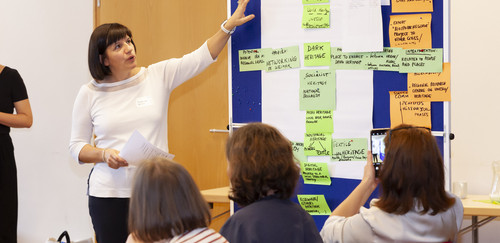
During the first semester (6 ECTS), students attend lectures, seminars, and laboratory sessions that introduce the theoretical foundations of architectural heritage conservation, restoration principles, building pathology, documentation techniques, and international conservation frameworks. After acquiring the necessary knowledge and methodological background, students participate in a two-week on-site workshop in Gjirokastra (November–December). Working in interdisciplinary teams, students undertake the documentation and analysis of selected traditional houses. Activities include architectural surveying, metric documentation, photographic recording, condition assessment, material investigation, and pathological analysis of the existing structures. The collected data are subsequently processed in the classroom environment, where each group develops a restoration and conservation proposal for the assigned building. This phase encourages critical thinking and the application of heritage conservation principles to real-world challenges.
During the second semester (6 ECTS), the approved restoration proposals move beyond the design stage and enter a limited implementation phase. Following additional technical preparation, students return to Gjirokastra for a second two-week field workshop (March–April). Under the supervision of academic staff, conservation specialists, and local stakeholders, student teams participate in the execution of selected restoration interventions identified within their projects. Rather than undertaking full building restorations, the activities focus on specific architectural elements, materials, or conservation actions that can be realistically implemented within the educational framework and available resources. This approach allows students to experience the practical realities of heritage conservation while generating tangible benefits for the local community.
The interdisciplinary nature of the Living Lab is one of its defining characteristics. While rooted in heritage restoration and conservation, the programme integrates knowledge and methodologies from multiple
disciplines, including:
• Architecture;
• Build-Heritage Conservation and Restoration;
• Building Pathology and Construction Technologies;
• Architectural Surveying;
• Digital Heritage Documentation;
• HBIM and Computational Modelling;
• Urban and Cultural Heritage Studies;
• Sustainability Construction Practices;
• Community Engagement and Participatory Planning;
• Building Materials Investigation.
Digital technologies constitute an important component of the programme. Students are introduced to advanced documentation methods, including drone-based surveying, laser scanning, photogrammetry and
HBIM workflows, enabling them to connect traditional conservation practices with contemporary digital tools.
The proposed Regional Living Lab therefore operates as a bridge between academic learning, professional practice, digital innovation and community engagement. By combining classroom instruction, field-based
research, collaborative design, and hands-on conservation activities, the programme reflects the core values of the New European Bauhaus sustainability, inclusiveness, beauty and innovation while contributing to the
preservation and enhancement of one of Albania’s most significant cultural heritage sites.
Learning Outcomes
By the end of the Regional Living Lab programme, integrated within the course Cultural Heritage Restoration and Conservation, students will have acquired a comprehensive understanding of the theoretical, technical, and practical dimensions of heritage conservation. Through the combination of classroom instruction, digital documentation, project-based learning, and hands-on restoration activities in the UNESCO World Heritage city of Gjirokastra, participants will develop interdisciplinary competencies that connect architectural heritage, sustainability, digital innovation, and community engagement.
Knowledge and Understanding
Students will acquire advanced knowledge of the principles, theories, and methodologies that underpin the conservation and restoration of cultural heritage. They will understand the historical evolution of restoration thought, from early conservation approaches to contemporary international practices and standards.
By the completion of the programme, students will be able to:
• Explain the cultural, architectural, social, and historical significance of heritage assets and their role within contemporary communities.
• Understand the principles of architectural conservation, restoration, adaptive reuse, and heritage management.
• Interpret building pathologies, material deterioration processes, and structural vulnerabilities commonly found in historic buildings.
• Understand the relationship between heritage conservation, urban development, sustainability, and community wellbeing.
• Recognize the importance of vernacular architecture and traditional construction techniques as expressions of local identity and cultural continuity.
• Understand the role of digital technologies in documenting, analyzing and managing cultural heritage resources.
• Practical and Technical Skills
The Living Lab methodology places particular emphasis on learning through direct experience. As a result, students will develop a range of practical skills through fieldwork, digital documentation, design development, and supervised restoration activities.
Students will be able to:
• Conduct architectural surveys and field documentation of historic buildings.
• Apply methods of condition assessment, material investigation, and pathological analysis.
• Produce accurate digital representations of heritage assets using contemporary surveying and modelling technologies.
• Use advanced digital tools including photogrammetry, drone-based documentation, laser scanning, BIM, and HBIM workflows.
• Develop restoration and conservation proposals based on documented evidence and recognized conservation principles.
• Integrate architectural, technical, structural, and material considerations into restoration projects.
• Collaborate in multidisciplinary teams to solve complex heritage-related challenges.
• Participate in the implementation of selected restoration interventions under professional supervision, gaining direct experience with traditional materials and conservation techniques.
• Professional Competences
The programme aims to strengthen students’ ability to operate within complex real-world environments where technical, cultural, social, and environmental considerations intersect.
Upon completion, students will be able to:
• Critically evaluate conservation strategies and propose appropriate interventions for historic buildings.
• Balance heritage protection requirements with contemporary functional, social, and environmental needs.
• Work effectively within interdisciplinary and multicultural teams.
• Communicate technical findings and project proposals to academic, professional, institutional, and community stakeholders.
• Apply ethical principles in decision-making processes related to cultural heritage conservation.
• Contribute to the sustainable management, revitalization, and enhancement of cultural heritage sites.
• Demonstrate leadership, responsibility, and professional judgement in heritage-related projects.
• Alignment with the New European Bauhaus Compass
The learning outcomes of the Regional Living Lab directly support the values and working principles of the New European Bauhaus (NEB) Compass. Sustainability is addressed through the conservation and adaptive enhancement of existing heritage assets, promoting resource efficiency, circular approaches to construction, and the long-term preservation of cultural resources. Students learn how restoration can contribute to environmental responsibility by extending the life cycle of existing buildings and preserving embodied cultural and material value. Inclusiveness is embedded through collaborative learning processes involving students, academic staff, local communities, craftspeople, heritage professionals, and public institutions. Participants develop an understanding of heritage as a shared social resource and learn to engage with diverse stakeholders in decision-making processes. Beauty and Quality of Experience are explored through the study and conservation of Gjirokastra’s vernacular architecture. Students learn to recognize architectural heritage not only as a technical asset but also as a source of cultural identity, aesthetic value, and collective memory. Innovation is promoted through the integration of advanced digital technologies, including drone surveying, laser scanning, BIM, and HBIM methodologies. Students learn to combine traditional conservation knowledge with contemporary technological tools, fostering innovative approaches to heritage documentation, analysis, and intervention.
Finally, the programme embraces the NEB principles of transdisciplinary collaboration, place-based learning, participation, and experimentation. Through direct engagement with a UNESCO World Heritage context, students gain the capacity to address real societal challenges while contributing to the sustainable and inclusive future of Europe’s cultural heritage.
Prerequisites for the Course
Basic digital skills for documentation and data processing (e.g., CAD, REVIT, photogrammetry, or HBIM knowledge is advantageous but not mandatory)
Registration Info and Deadline
Online-info-meeting: September 21
Application: motivation letter in the mail
Application deadline: October 1
Send the application per mail: nikolla_vesho@universitetipolis.edu.al
At a Glance
| Where | Universiteti POLIS |
| Name of lecturer(s) | Dr. Nikolla Vesho (Lecturer) Dr. Malvina Istrefaj (Lecturer) Dr. Kristiana Meço (Lecturer) MSc. Romir Mazari (Assistant Lecturer) |
| Open for students from faculties/degree programmes | Faculty of Architecture and Urban Design |
| Time period | (S1) September 2026 - February 2027 (S2) February - July 2027 |
| Year | Year 4 |
| Planned format | Lecture, Seminar, Tutorial, Workshop, Project |
| Required study level(s) | Year 4 |
| ECTS | Year 4: 6 ECTS (S1) 6 ECTS (S2) |
| Registration info and deadline | Online-info-meeting: September 21 Application: motivation letter in the mail Application deadline: October 1 Send the application per mail: nikolla_vesho@universitetipolis.edu.al |
| Contact person | Nikolla Vesho - nikolla_vesho@universitetipolis.edu.al (POLIS University) |

Stay Tuned!
Listen to our BAUHAUS4EU Podcast and sign up for our newsletter – stay up to date on all of our ongoing developments and planned activities!
Download Area
In the Download Area, you can find our communication kit, logos, deliverables and other useful documents.