Campus Living Lab - Co-Play&Create
Course Title
Campus Living Lab - Co-Play&Create
Course Description of Regional Living Lab
The main objective of the interdisciplinary course implemented within the Regional Living Lab framework, titled “Campus Living Lab - Co-Play&Create,” is to develop innovative, multi-variant spatial development concepts for the area surrounding the academic campus. Currently, the urban structure of the target area is fragmented and lacks cohesion, failing to function as a recognizable center of academic and social life. The deficit of high-quality public spaces contributes to a loss of identity and limits social integration among students and local communities.
Designed as a 30-hour intensive program consisting of workshops, practical exercises, and field research, the course follows a research-by-design approach. Students will move from spatial diagnosis and participatory exploration of urban problems to the development and public presentation of spatial proposals addressing challenges around the campus of the University of Economics in Katowice and its surroundings.
To address this complex challenge, the RLL combines theoretical foundations and practical tools from multiple disciplines, engaging students from economics and spatial management programs in collaborative project teams. Students will analyze the urban layout of the campus and observe mobility patterns at different times and during different seasons, as diagnostic activities are planned for both winter and summer semesters.
The course also integrates elements of urban sociology and social geography, equipping students with qualitative and participatory research methods to better understand user behavior and expectations. From an economic perspective, principles of spatial economics and municipal management will support the analysis of local service-sector potential and regeneration processes through the lens of sustainability, the sharing economy, and regional value creation.
A strong technological dimension is introduced through Geographic Information System (GIS) and contemporary digital methods of spatial data collection and analysis. Students will work with spatial data visualization, mobility mapping, and selected digital or data-driven tools supporting evidence-based urban diagnostics. This component combines traditional field research with modern technological approaches to understanding spatial dynamics and public space usage.
The core educational innovation of the course lies in its experimental, participatory, and practice-oriented “Co-Play” approach. Rather than relying on traditional passive consultation methods, the project creates an interactive environment involving university authorities, administrative staff, academic faculty, students, and residents from surrounding neighborhoods.
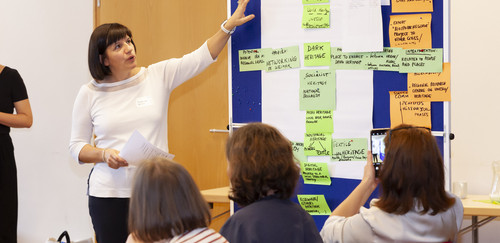
To connect these groups, students will apply various participatory and experimental tools. They will conduct neighborhood walkabouts to identify spatial conflict zones together with local stakeholders. Educational and simulation games may be used to facilitate discussions and balance conflicting user needs. Participatory mapping and targeted surveys will allow students to gather grassroots knowledge regarding daily routines, mobility, accessibility, and perceived spatial deficits.
During the design phase, students may also explore selected rapid prototyping techniques and small-scale experimental forms of spatial visualization or intervention testing, such as conceptual mock-ups, modular elements, or temporary public-space arrangements. These activities are intended to support the practical verification and discussion of ideas rather than large-scale implementation.
By combining spatial analysis, economic perspectives, participatory methodologies, and digital diagnostic tools within one educational framework, the course goes beyond conventional academic learning. Students will develop analytical, technological, and collaborative competencies, including GIS skills, evidence-based problem solving, interdisciplinary teamwork, and social mediation capacities. At the same time, the project aims to generate socially grounded and innovative spatial visions that can contribute to transforming the campus into a more inclusive, sustainable, and community-oriented part of the regional urban fabric.
Learning Outcomes
By the end of the course, students will acquire a comprehensive set of hard analytical competencies and soft leadership skills, deeply aligned with the New European Bauhaus (NEB) Compass. From the students’ perspective, the learning outcomes are structured around three pillars: advanced spatial-economic understanding, experimental participatory methodology, and communication and work with different stakeholders. In terms of specific competencies, students will master the practical application of Geographic Information System (GIS) to analyze and visualize real-time urban traffic and spatial usage data across different seasons at campus and its surroundings. They will develop the capacity to diagnose architectural barriers and assess their impact on the development of local community integration, social interaction, and the overall quality of public space within the campus environment.
From an economic perspective, students will acquire the competence to evaluate regeneration projects through the lens of the circular economy and sustainable regional value creation, moving away from linear development toward circular, resource-efficient urban models. Crucially, through the “Co-Play” component, students will gain highly sought-after soft skills: they will learn how to act as leaders of local change, manage group dynamics in diverse teams, demonstrate design flexibility when adapting to shifting social needs, and master mediation and conflict-resolution techniques when navigating conflicting stakeholder interests.
These learning outcomes directly and systematically align with the two main axes of the New European Bauhaus Compass: the three core values and the three working principles. Regarding the NEB Values, the course first addresses Sustainability by training students to replace the concrete-heavy “disjointed collection of buildings” with nature-based solutions. Students will learn to implement circular economy principles in urban regeneration, assessing the lifecycle and sustainability of their proposals, for example modular urban furniture.
Secondly, Inclusivity, understood as Togetherness, is at the heart of the learning goals. Students will acquire the skills to bridge the gap between the university and the city, designing a campus that is not a closed enclave but an integrated extension of Katowice’s post-industrial urban fabric. By engaging vulnerable or passive groups, such as local residents and administrative staff, students learn to design accessible, democratic, and welcoming public spaces for all.
Lastly, Aesthetics, understood as Beautiful, is integrated not merely as superficial decoration, but as functional beauty that fosters a sense of belonging, ownership, and well-being. Students will learn how high-quality spatial design can restore the identity of a place and turn a fragmented space into an inspiring center of academic and civic life.
The participatory approach is embedded through the “Co-Play” approach. Students will not just study participation theoretically; they will actively facilitate it. By mastering co-creation tools, such as educational simulation games, neighborhood walkabouts, and rapid prototyping, they gain the competence to co-design with the community rather than just for them. Secondly, the multilevel ambition is reflected in the tangible, real-world impact of the course. Students will understand how local, grassroots interventions at the campus level connect to broader regional and global urban policies, such as the European Green Deal. Because the developed structural variants have a genuine potential for real-world implementation by the university authorities, students will acquire the empowering competence of seeing their academic projects transition from prototype into a permanent catalyst for urban transformation.
Prerequisites for the Course
No prerequisites
Registration Info and Deadline
Registration starts: October 2026 / approximately the third week of the winter semester 2026/2027.
Registration deadline: first week of November 2026.
The exact dates may be subject to change due to internal administrative procedures and organisational arrangements at the university.
At a Glance
| Where | University of Economics in Katowice |
| Name of lecturer(s) | dr Agnieszka Majorek-Gdula; Wiktoria Jędrusik; dr Piotr Stefański |
| Open for students from faculties/degree programmes | Open for all students: Faculty of Spatial Economy and Regions in Transition, Faculty of Informatics and Communication |
| Time period | September 2026 to July 2027 |
| Year | All years |
| Planned format | Lecture; Workshop; Project |
| Required study level(s) | All students |
| ECTS | 6 ECTS, 30 h |
| Registration info and deadline | Registration starts: October 2026 / approximately the third week of the winter semester 2026/2027. Registration deadline: first week of November 2026. The exact dates may be subject to change due to internal administrative procedures and organisational arrangements at the university. |
| Contact person | Piotr Rykała - piotr.rykala@uekat.pl |

Stay Tuned!
Listen to our BAUHAUS4EU Podcast and sign up for our newsletter – stay up to date on all of our ongoing developments and planned activities!
Download Area
In the Download Area, you can find our communication kit, logos, deliverables and other useful documents.