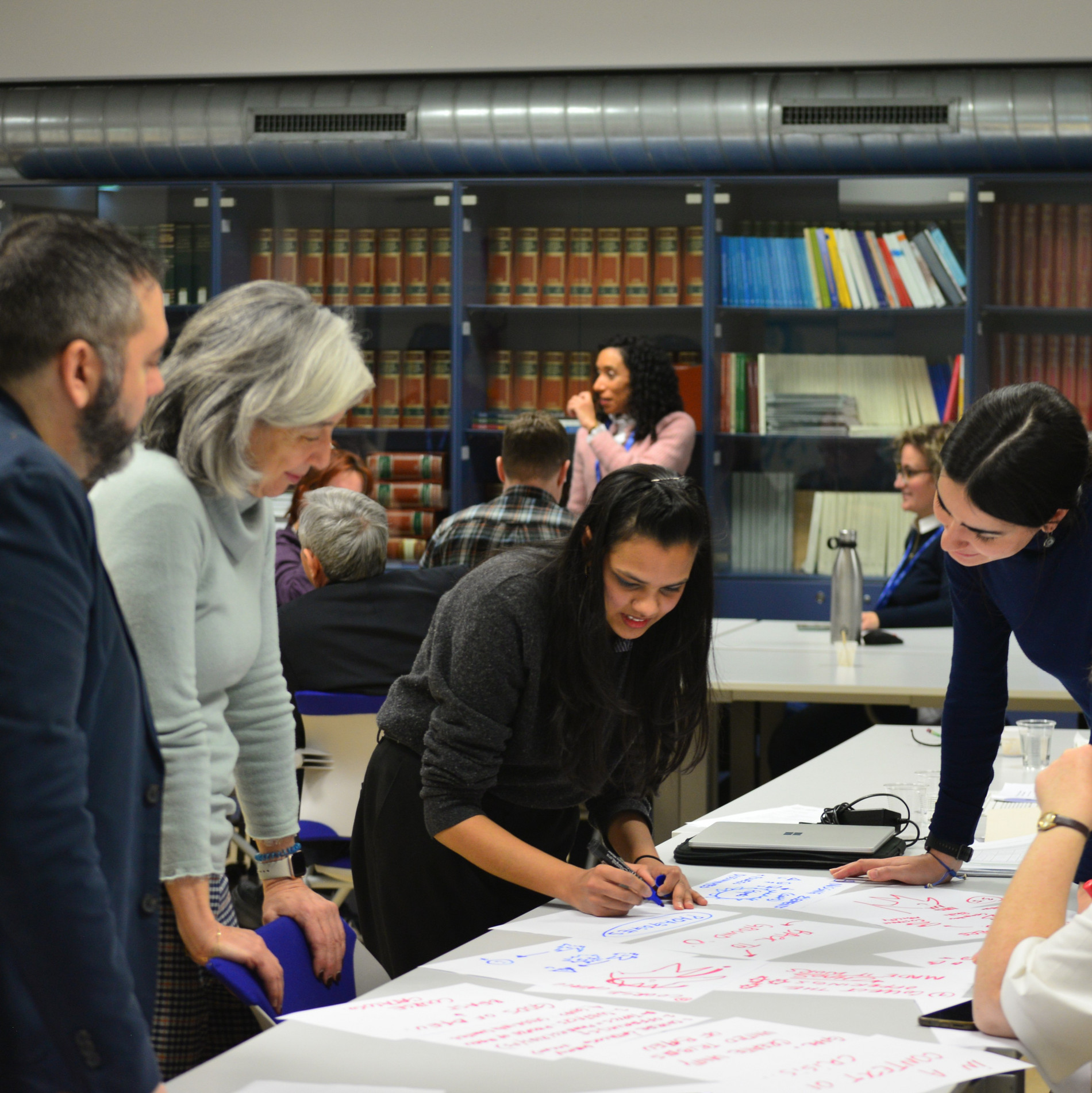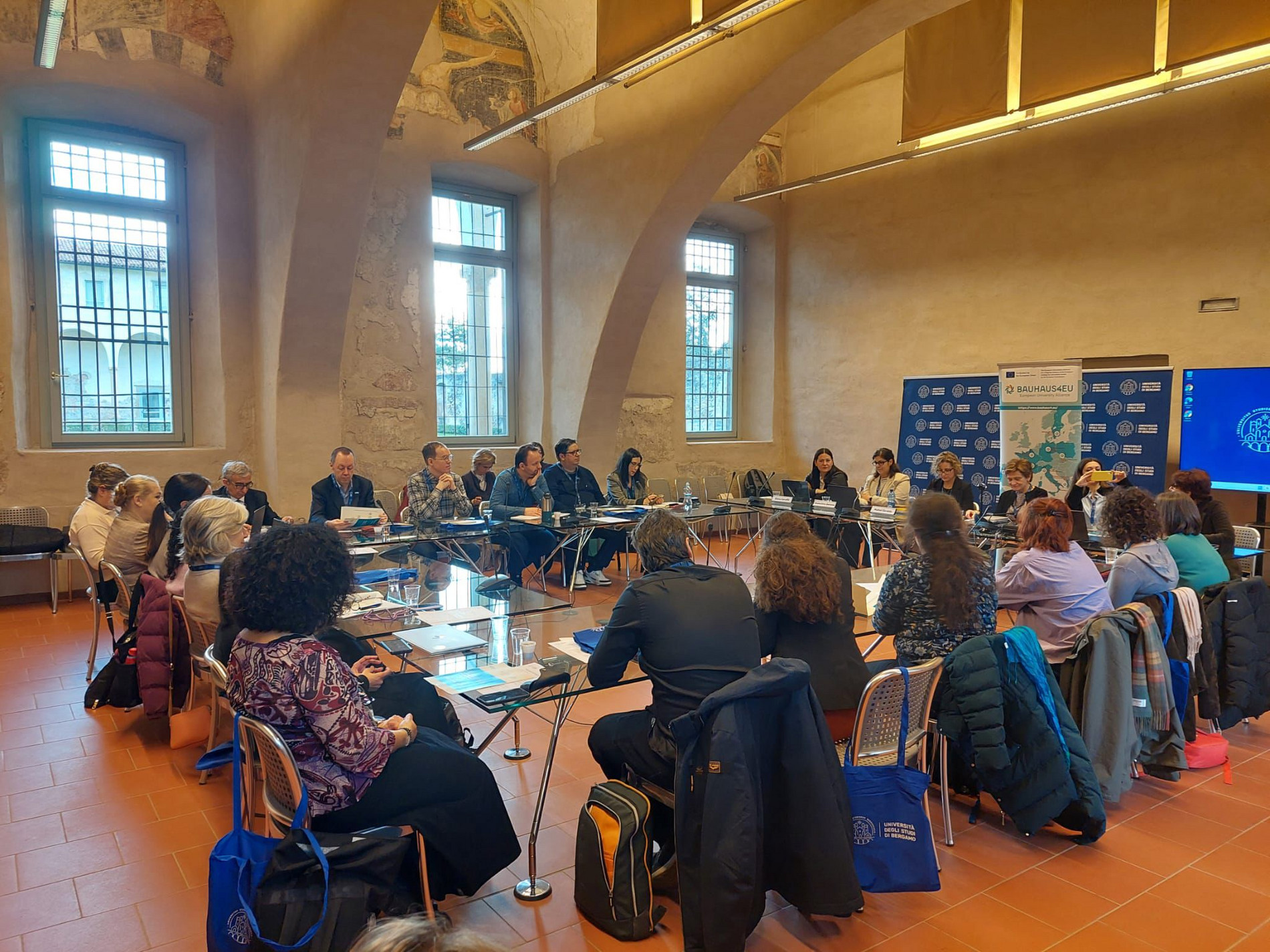
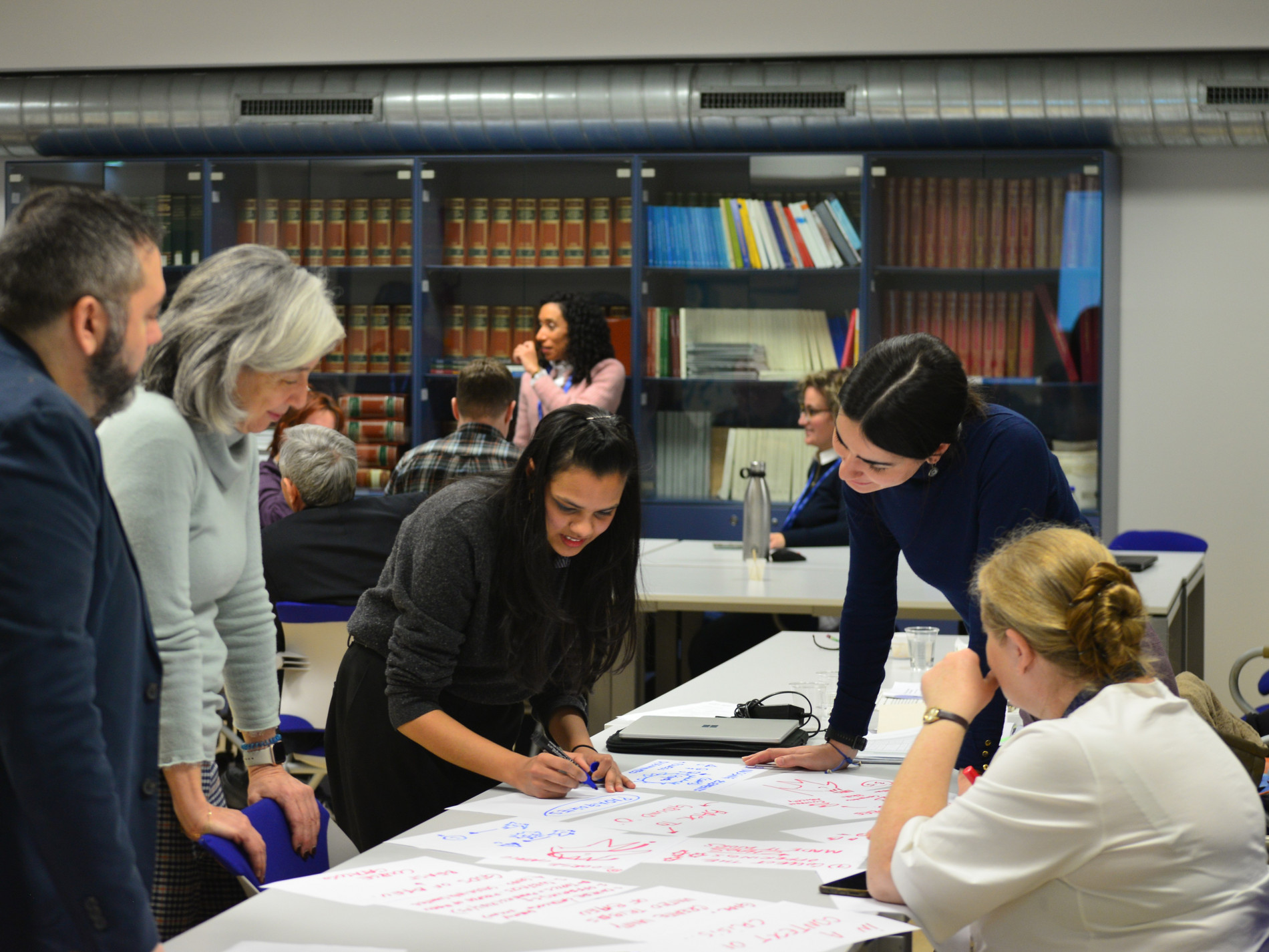
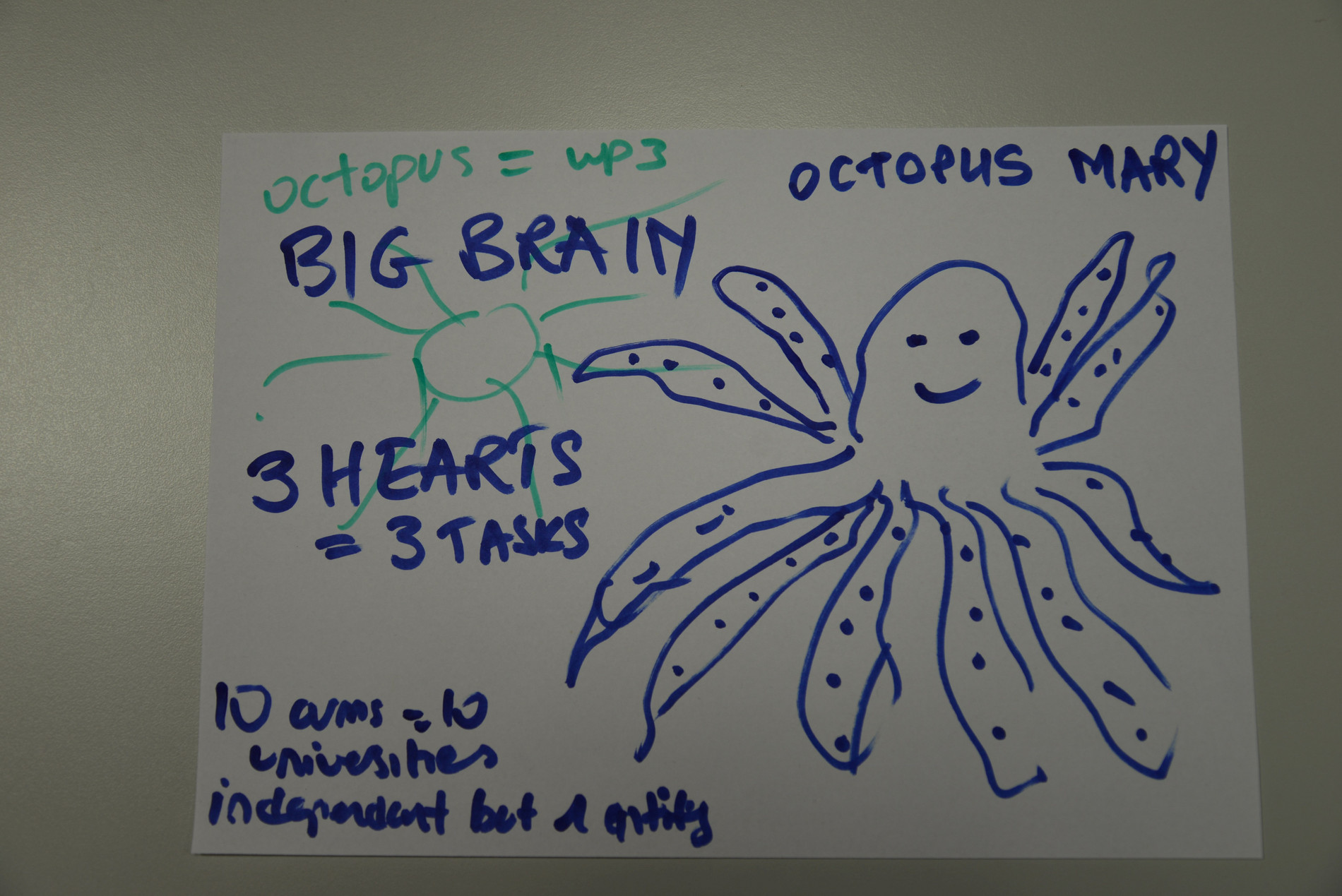
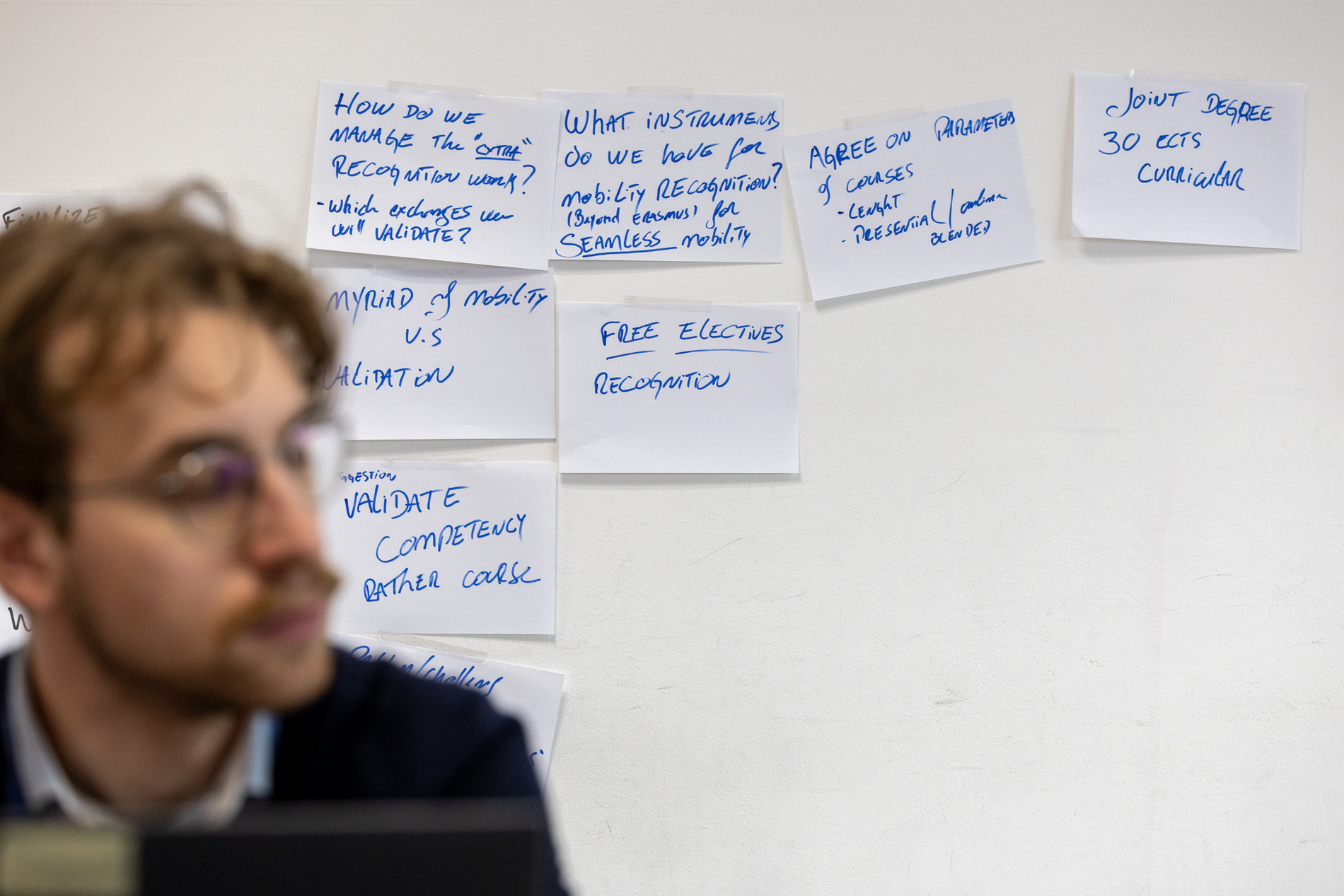
Among shared moments, focused discussions, and, as expected, a considerable amount of coffee, participants worked collaboratively on advancing the conceptual framework for BAUHAUS4EU Education & Training Formats.
The working week unfolded across four University venues, connecting the historic and contemporary dimensions of Bergamo’s academic environment. Activities took place between the heritage settings of Sant’Agostino and Palazzo Bernareggi and the modern facilities of the Caniana and Pignolo campuses, symbolically reflecting the alliance’s ambition to bridge tradition and innovation in higher education. Beyond the formal sessions, the programme also included opportunities for informal exchange - from a social dinner to a guided visit of Bergamo’s historic Città Alta - strengthening the collaborative spirit that underpins the alliance.
The programme opened with a strategic overview of WP3, setting the stage for a deep dive into the Grant Agreement objectives and the development of Deliverable D3.1, a cornerstone for structuring future BAUHAUS4EU educational formats. Participants engaged in aligning activities, reviewing roles, milestones, and risks, and focused on structuring the first draft of the conceptual framework.
These initial sessions laid the groundwork for the following thematic focus: the development of joint curricula and the regulatory frameworks necessary to support them across national contexts. Day two centred on Task 3.1, addressing the complexity of designing joint and double degree programmes within a multi-national alliance. Through comparative mapping exercises, partners explored the existing joint and double degree models across institutions, legal and regulatory constraints and credit systems, as well as the structures of students’ mobility and curriculum. This mapping exercise is key to design the future – that is, the European BAUHAUS4EU campus. A joint workshop with WP10 further examined shared challenges in programme design, from quality assurance integration to aligning academic standards, highlighting the need for coordinated solutions that remain adaptable to regional and institutional diversity.
On the third day, discussions shifted toward Task 3.2 and Task 3.3, focusing on evaluation mechanisms and innovative pedagogical approaches. Workshops explored emerging teaching methodologies, including digital learning tools, transformative and collaborative learning models, and the integration of 21st-century skills such as problem-solving and interdisciplinary thinking in students’ curriculum. A cross-work package session brought WP3 into dialogue with WP6, WP7, WP8 and WP9, ensuring that conceptual developments remain aligned with future implementation pathways, from joint degrees to regional living labs.
The final day focused on synthesis and action planning. Participants refined the emerging structure of Deliverable D3.1, consolidating work on the overarching conceptual framework, the evaluation matrix, and pedagogical innovation strategies. next steps were defined, including timelines, responsibilities, and coordination mechanisms across tasks and work packages. The working week concluded with closing reflections from WP leadership and the University of Bergamo’s institutional representatives, reaffirming the strategic importance of WP3 in shaping inclusive, flexible, and future-oriented education models within BAUHAUS4EU.