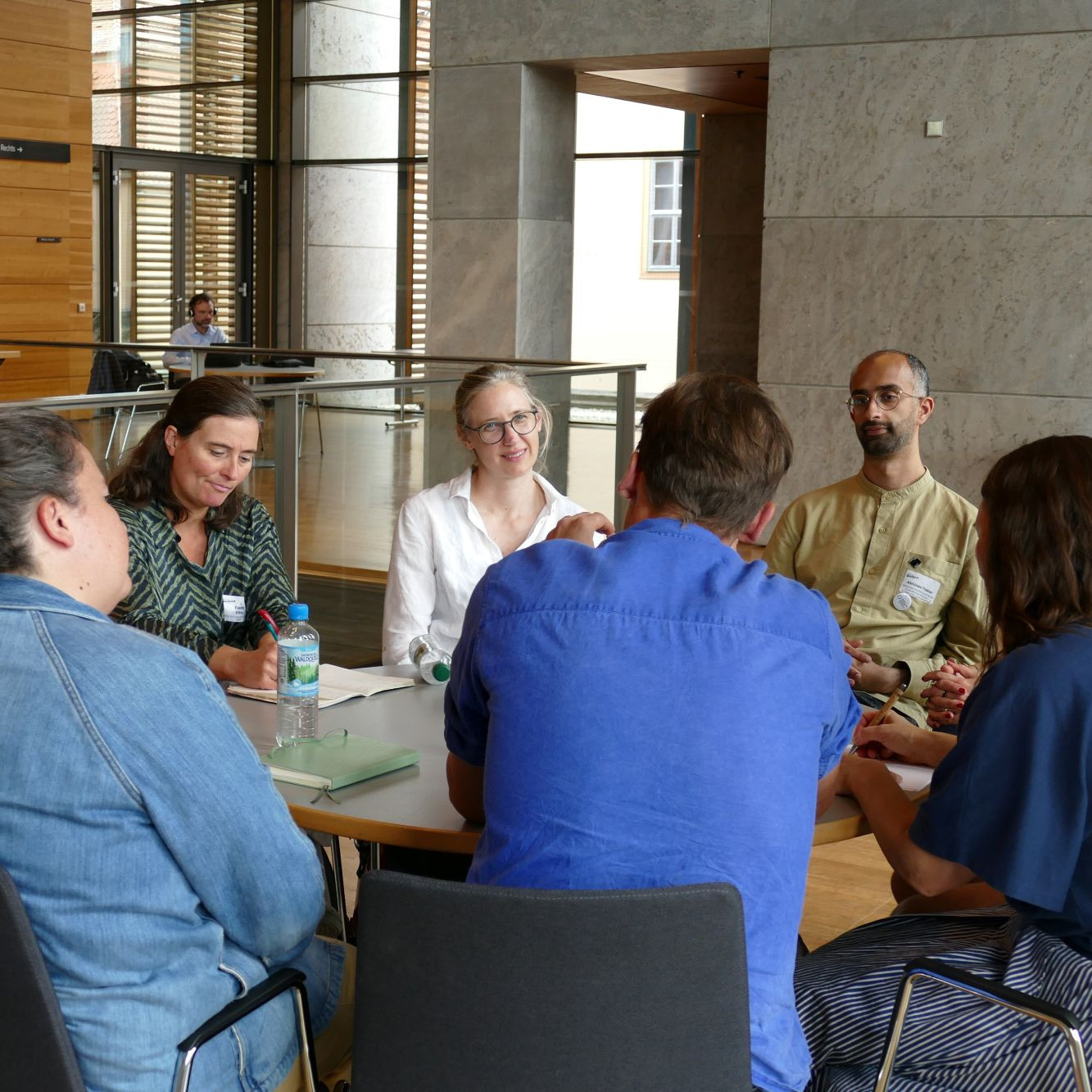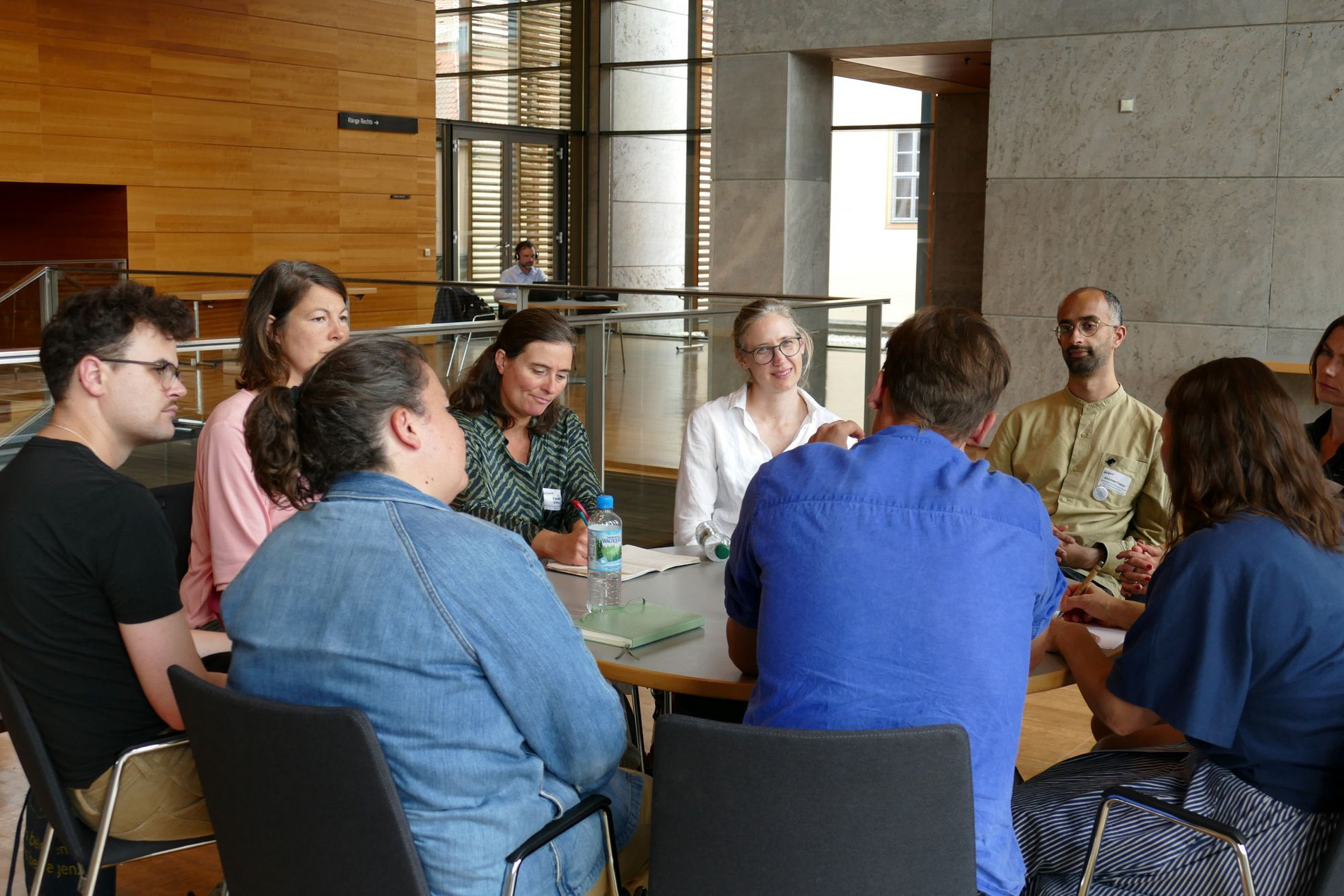
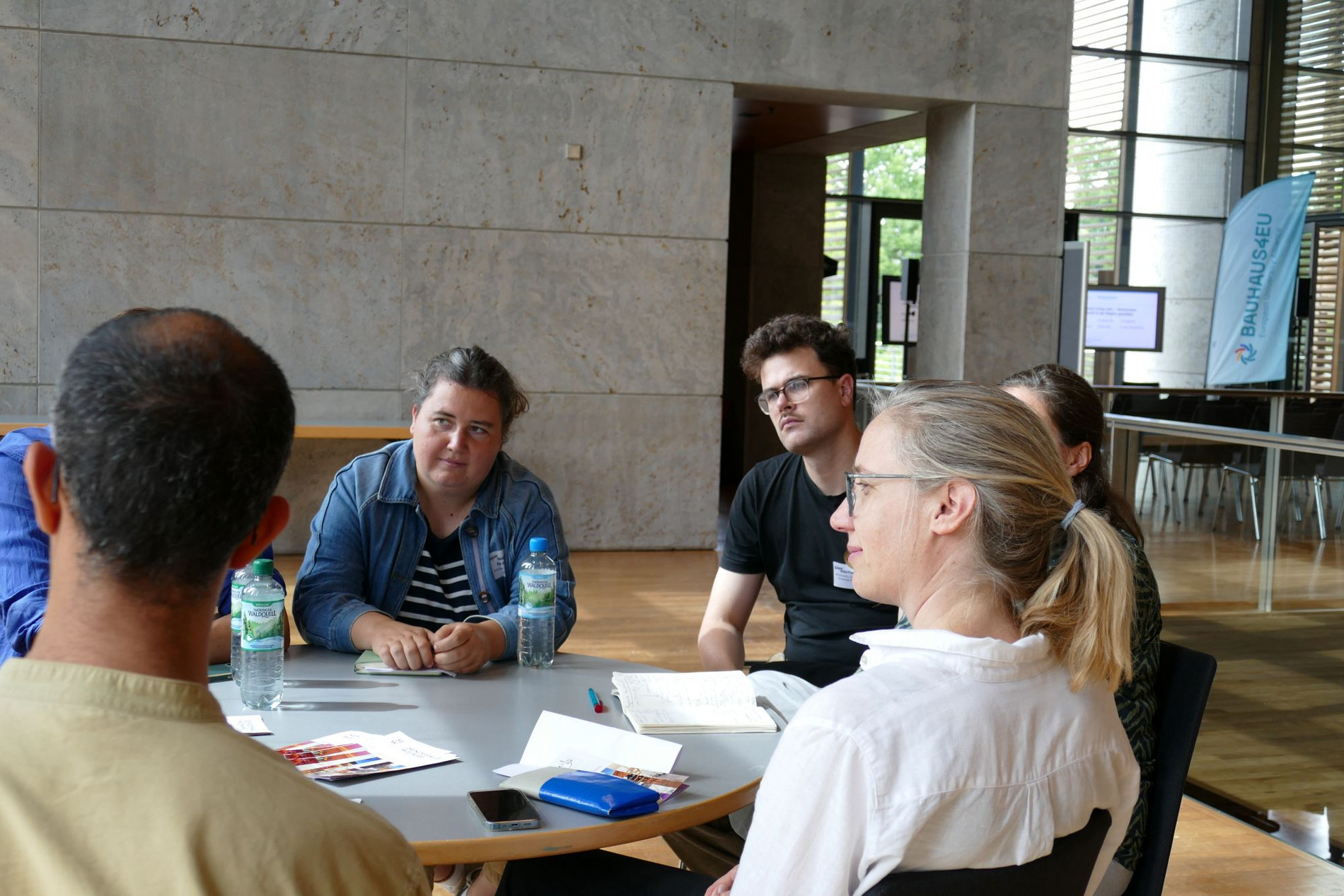
„That is why it is important to consider from the very beginning how the ideas and processes that emerge can be continued by the local partners“, Doreen Blau stated during a roundtable with the Weimar-based Regional Living Labs organisers.
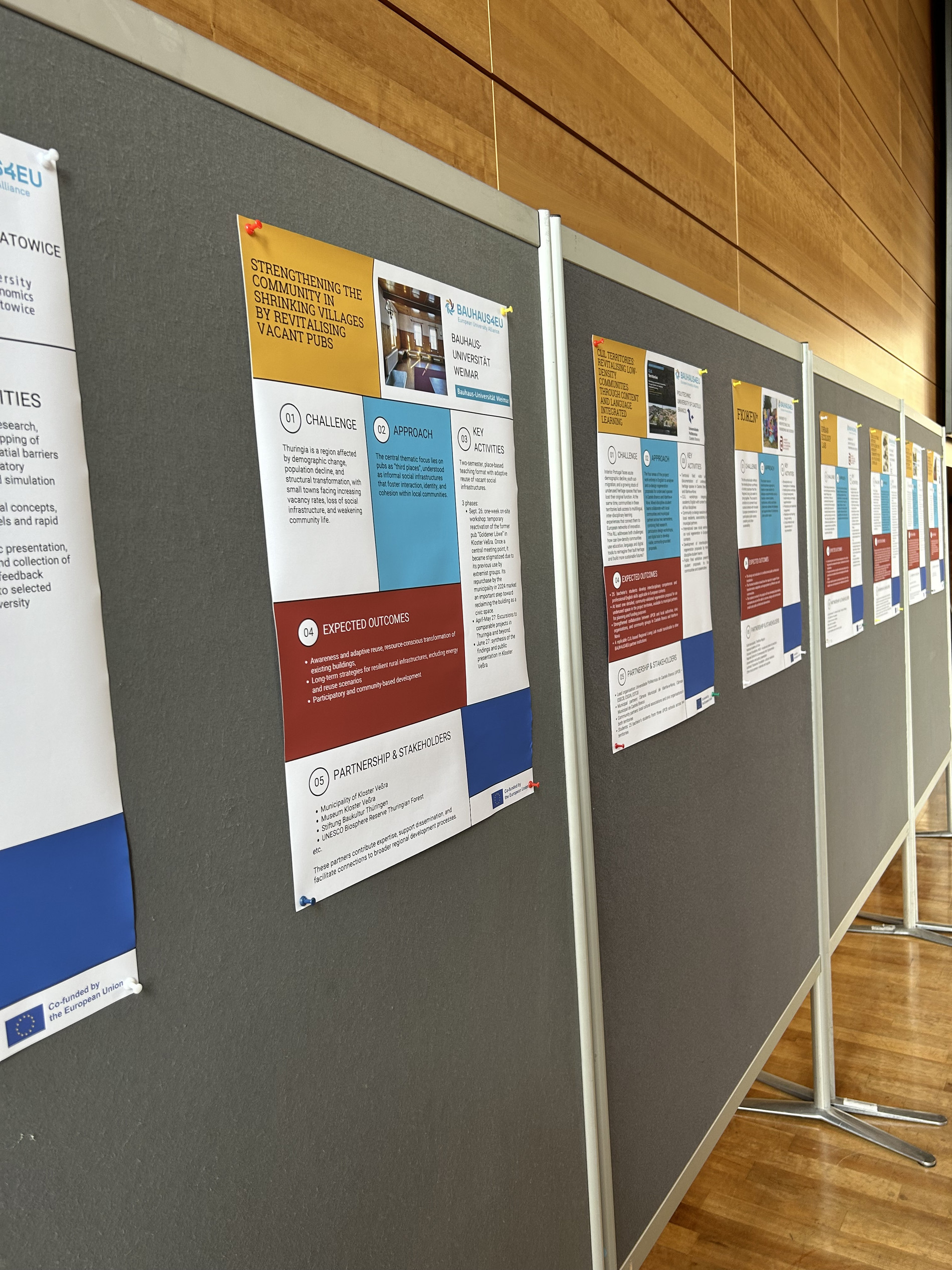
The roundtable took place on 2 September and brought together the organisers of the upcoming Regional Living Labs at Bauhaus-Universität Weimar Elodie Vittu (Institute for European Urban Studies), Hélène Dal Farra (Language Centre) and Martin Kranz (Sendehalle Weimar) with representatives of successfully completed Labs, including Till Hoffmann (Chair of Design and Housing at Bauhaus-Universität Weimar), Doreen Blau (Biosphärenreservat Thüringer Wald) and Constanze Roth (Vogtlandpioniere). The discussion was also joined by Sarah Reiche and Abhinav Thakar from the National Contact Point of the New European Bauhaus, Elias Flory from neudeli and Dr.Tonia Schmitz, Secretary General of BAUHAUS4EU, who moderated the session.
All participants agreed right away: Regional Living Labs enable universities to have a positive impact on their regions by linking teaching to specific local challenges. Experiences from previous Labs show how student and lecturer initiatives can develop into lasting local projects that extend beyond the original course.
Tonia Schmitz summarises: “When we, as a university, engage with the region, it’s not about coming up with ready-made solutions. A good Regional Living Lab thrives on listening and learning from one another. Regional partners contribute their knowledge of the people, the places, and the challenges they face, while students and faculty contribute new perspectives and ideas to overcome these challenges. It is precisely through this exchange that solutions can emerge that are truly relevant to the local context.”
Close collaboration with regional partners therefore makes all the difference in turning a temporary teaching format into long-lasting positive change.
Another argument that was met with unanimous approval was the connection between sustainable regional development, participation and democracy. After all, when people talk about the future of a place, they are also negotiating whose perspectives are taken into account, how people can participate in shaping that future, and how different interests can be reconciled.
The roundtable connected regional practices with national networking and the European vision of the New European Bauhaus. The insights gained from Regional Living Labs can provide inspiration beyond BAUHAUS4EU for universities and regional partners seeking to use teaching as a tool for sustainable transformation.
The event took place as part of the NEW bauhaus Festival in Weimar, an interdisciplinary congress on the future of construction and building innovation.
Thank you to all participants for contributing their learnings, perspectives, ideas and plans!
Learn more about the Regional Living Labs and find local RLLs at your university here: https://www.bauhaus4.eu/regional-engagement/regional-living-labs/