
The Polytechnic University of Castelo Branco has officially launched its BAUHAUS4EU Regional Council, bringing together key regional stakeholders to strengthen collaboration between academia and local communities. Through strategic discussions and workshops, this initiative aims to address regional challenges, foster innovation, and drive sustainable development.
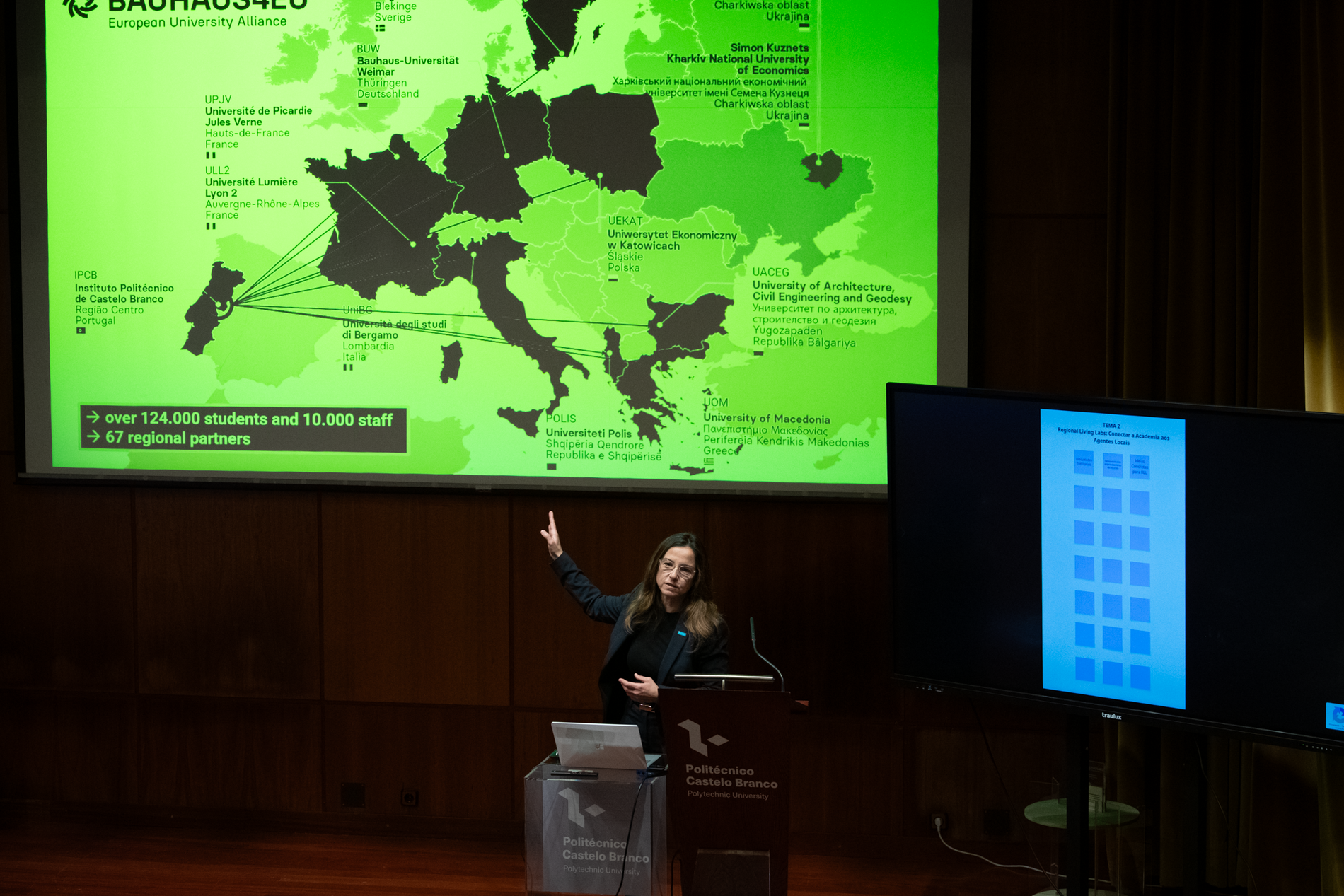

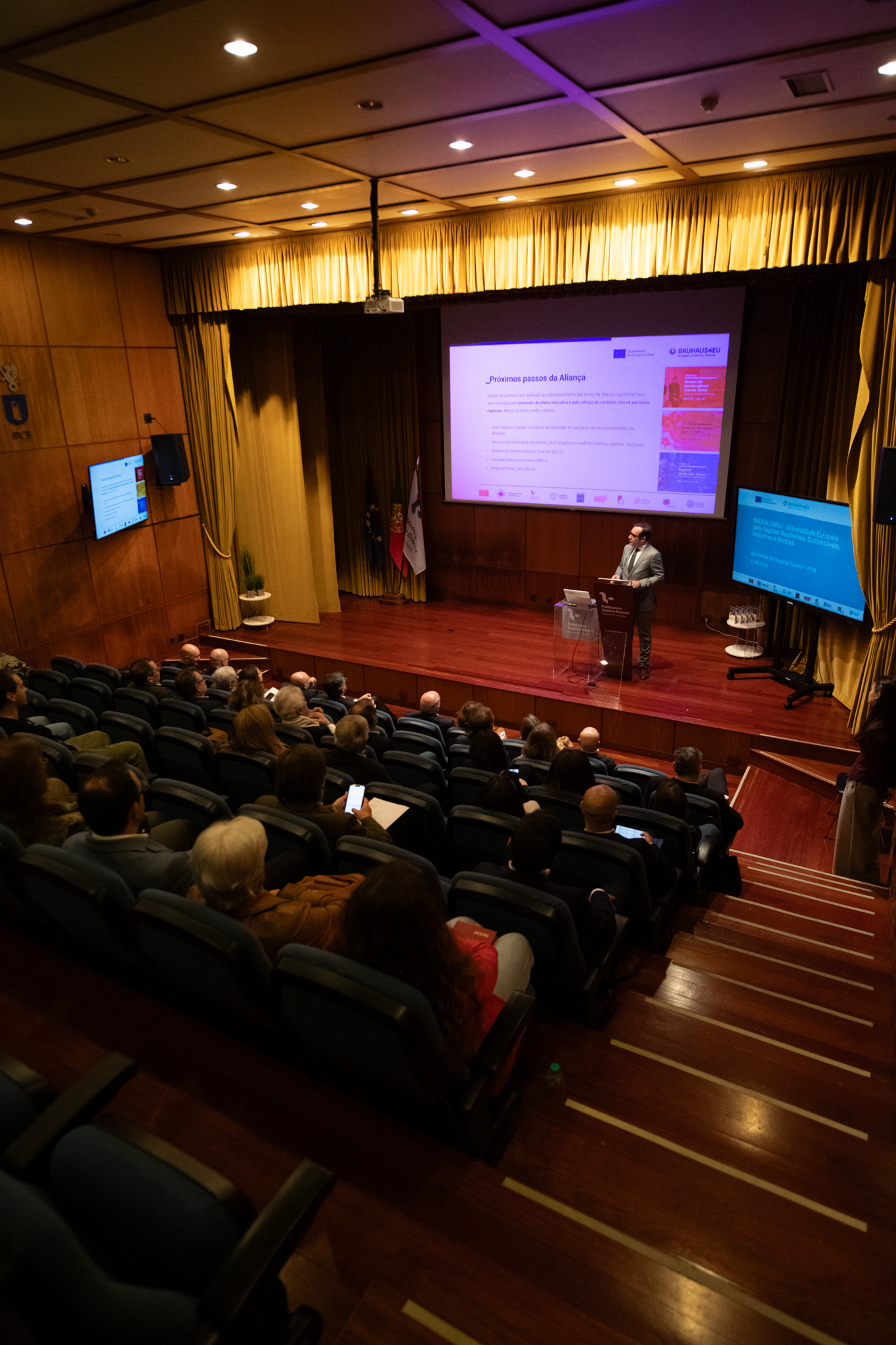
The Polytechnic University of Castelo Branco (IPCB) formally inaugurated the BAUHAUS4EU Regional Council – IPCB, an event that brought together municipal authorities, representatives from organizations and companies, faculty members, and members of the IPCB’s PhD and Student Councils. The ceremony took place on March 11 at the “Comenius” Auditorium at IPCB.
The ceremony began with an address by the President of IPCB, António Fernandes, who gave a brief presentation of the BAUHAUS4EU Alliance, highlighting in particular the opportunities it brings both to the academic community and to the territories where the universities are located.
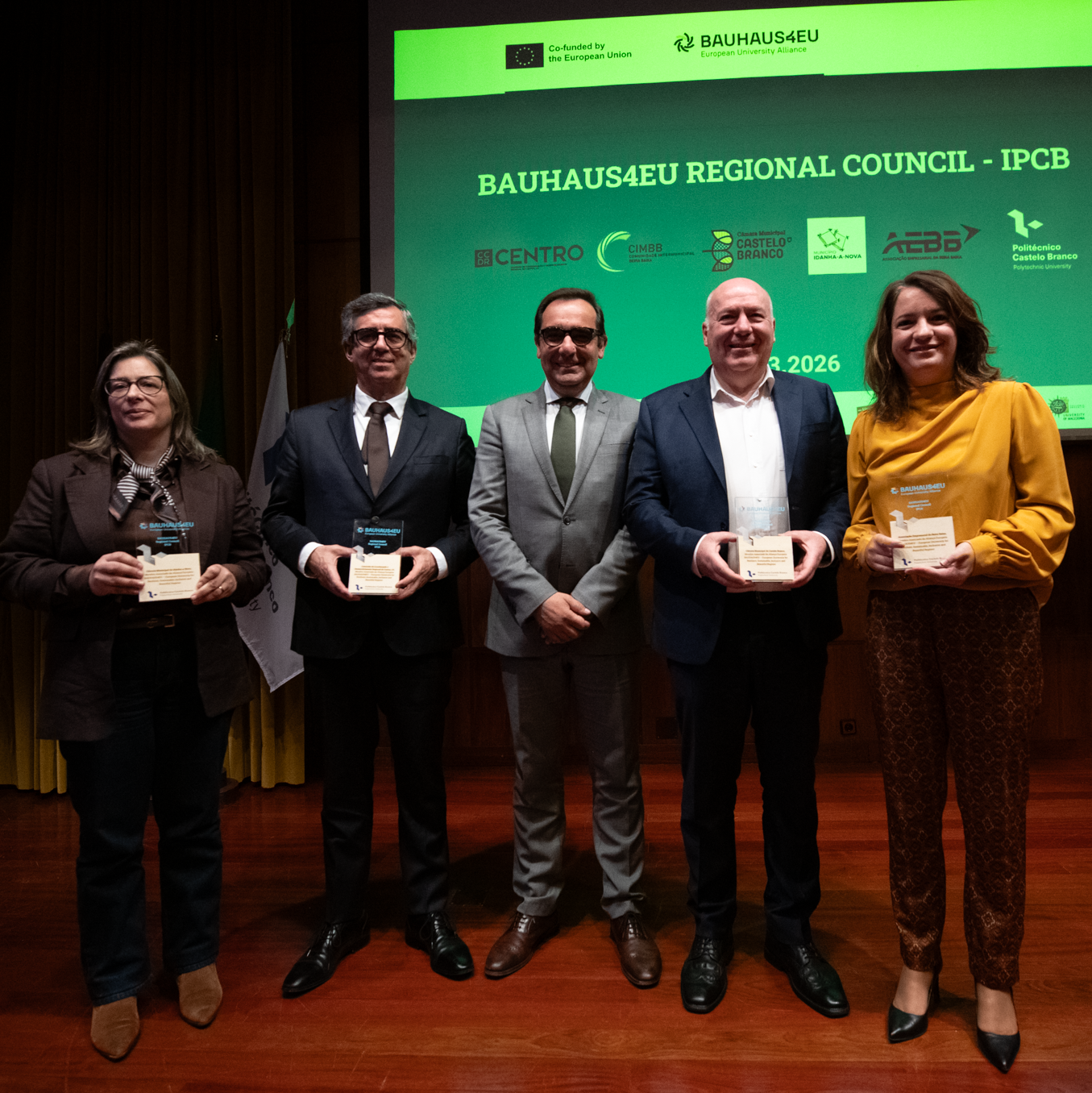
Associated partners also addressed the audience. In their remarks, they shared their perspectives on the territories they represent and reaffirmed their commitment to strengthening this partnership.
The programme continued with a set of workshops led by the Vice-President of IPCB, Ana Vaz Ferreira, in order to identify the social, economic, environmental, and cultural challenges of the region. The aim is to map strategic areas, training needs, and opportunities for collaboration between academia and local stakeholders to generate greater regional impact.
The outcomes of this process will support IPCB and the BAUHAUS4EU Alliance in defining priorities, mobilising resources, and working with regional partners to promote skills development, attract talent, implement innovative solutions, and foster sustainable territorial development.

The project has received funding from the European Union’s European Universities Initiative
“Funded by the European Union. Views and opinions expressed are however those of the
author(s) only and do not necessarily reflect those of the European Union or the European
Education and Culture Executive Agency (EACEA). Neither the European Union nor the granting
authority can be held responsible for them.“
This website is co-funded by the German Academic Exchange Service with funds from the German Federal Ministry of Research, Technology and Space.