Awards and Support
- Grand Prize: PLN 5,000 for the winning team
- Additional support: scholarship and coverage of travel and accommodation costs (for participants from partner universities outside UE Katowice)
Key Information
- Application deadline: April 17, 2026
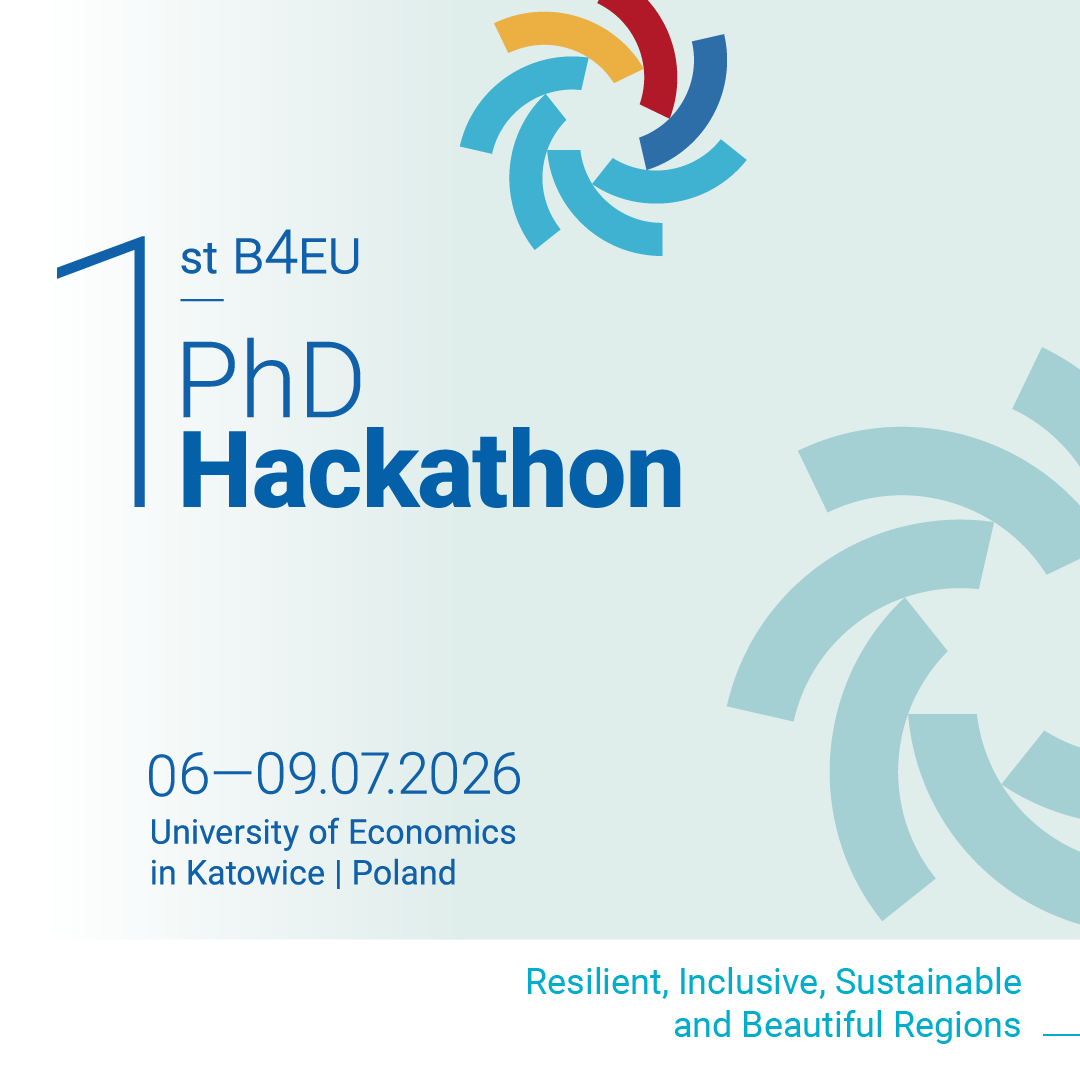
- Event dates: July 6-9, 2026
- Location: University of Economics in Katowice, Poland
The event is dedicated to PhD candidates from universities affiliated with the BAUHAUS4EU alliance.
Why Join?
Participating in the hackathon gives you the opportunity to:
- develop teamwork skills
- enhance intercultural communication
- work on real scientific and societal challenges
- collaborate in an international environment
- gain experience in designing innovative solutions
- present your ideas to experts
What Will You Learn?
During the event, you will:
- explore current trends in interdisciplinary research
- learn how to create solutions with practical (industrial and regional) applications
- strengthen your ability to work in international teams
More Than a Hackathon
This is not just an event - it is a space for:
- experimentation
- co-creation
- building international relationships
- making a real impact on the future of science and society
Apply Today
Don’t miss this opportunity!
- Application deadline: April 17, 2026
- Application form: available on the website
- More information: available on the website
About the Project
The event is organized as part of the project: "UEKat in BAUHAUS4EU - enhancing the university’s potential towards a European University for sustainable, resilient and inclusive regions", funded by the Polish National Agency for Academic Exchange (NAWA) under the programme "Support for European Universities."