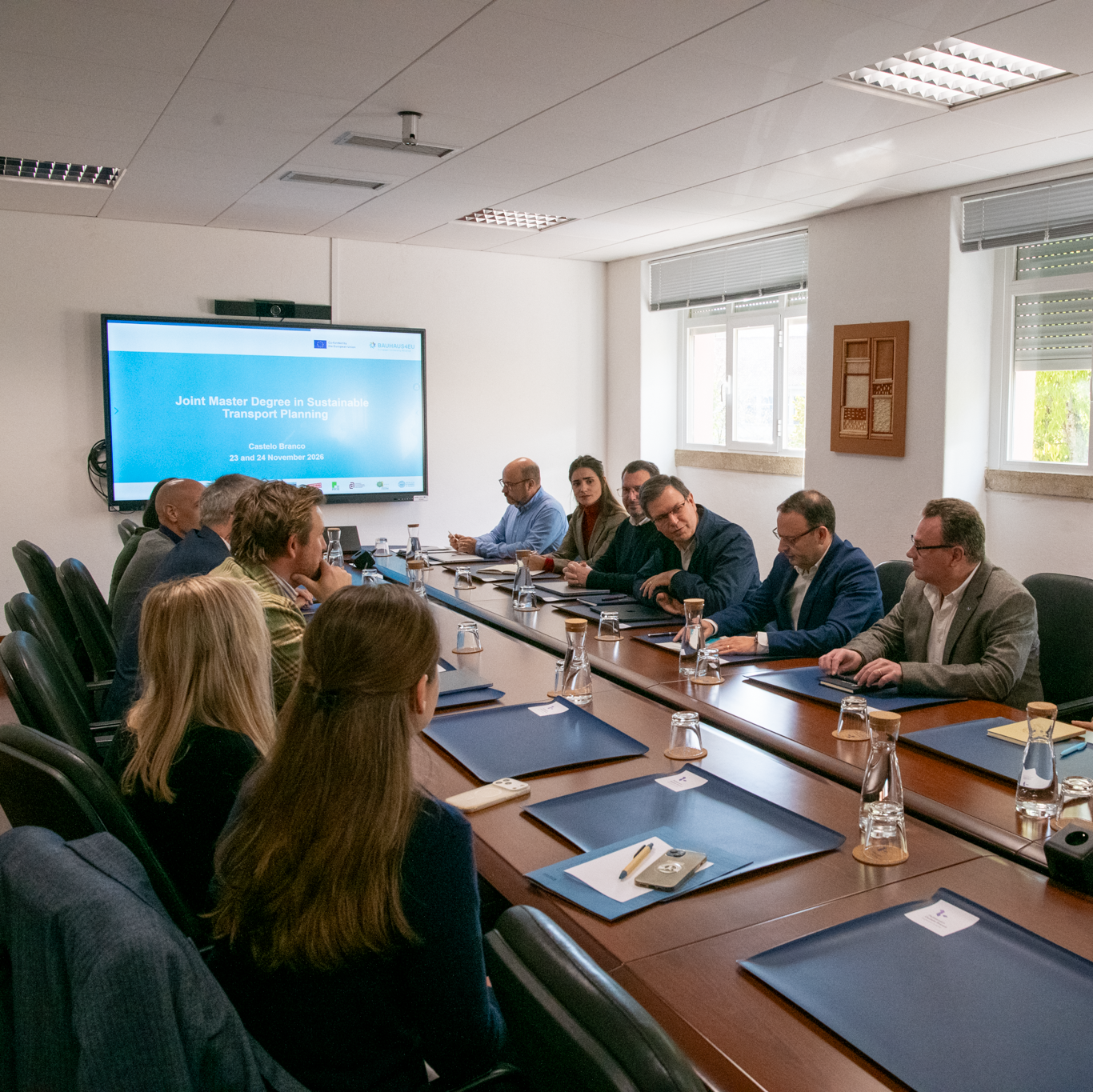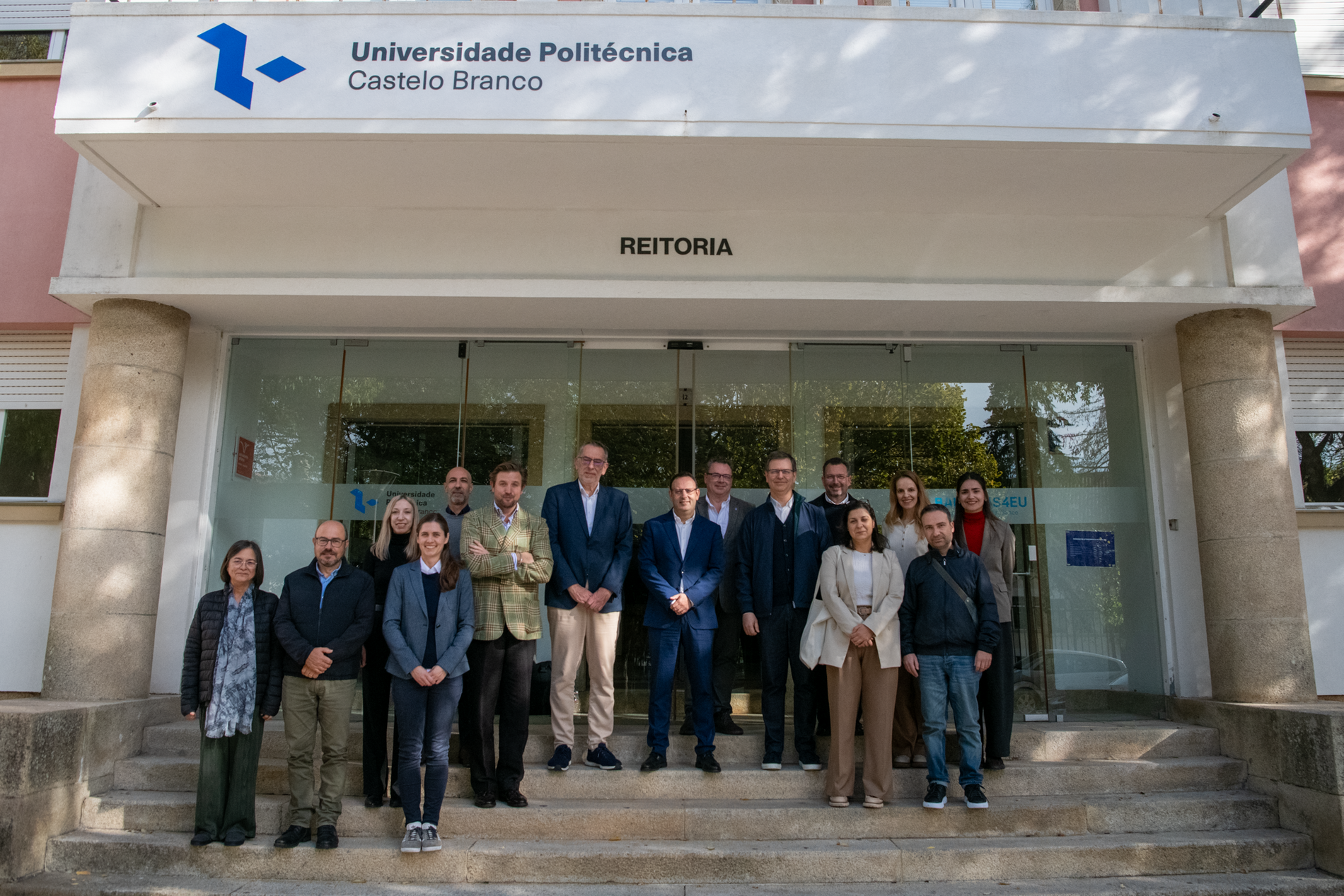
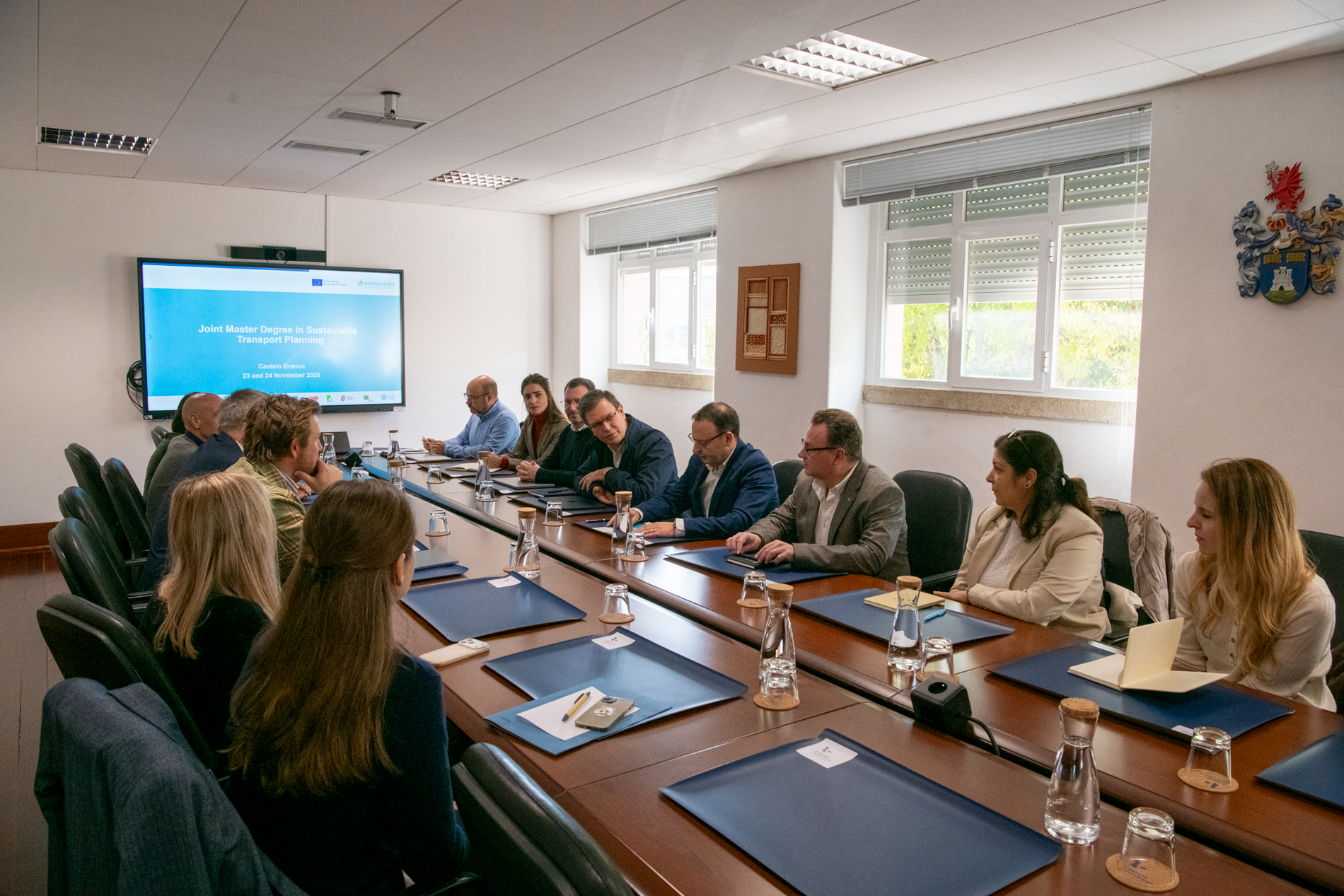
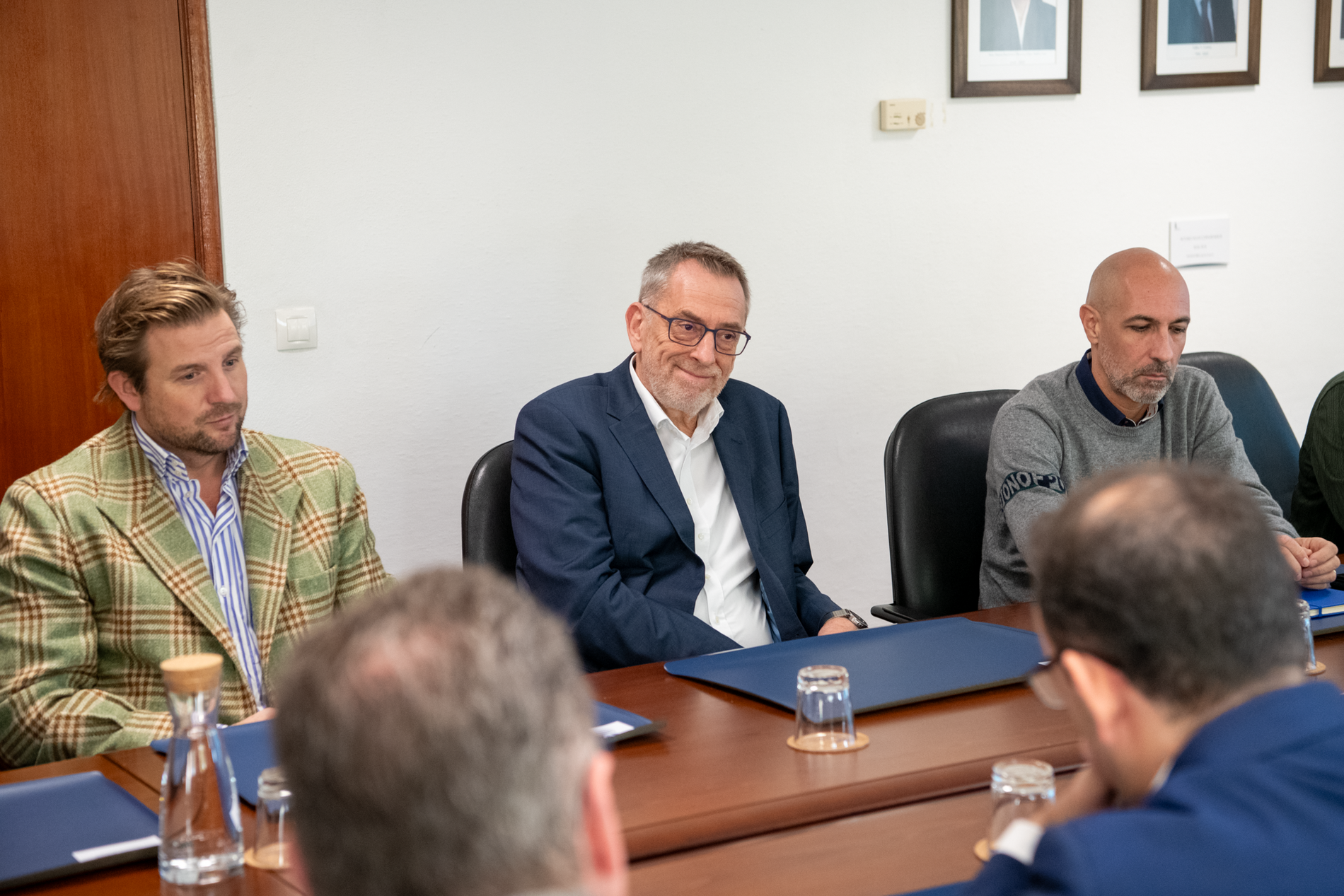
On 23 and 24 November, the Polytechnic University of Castelo Branco (UPCB) welcomed Bauhaus-Universität Weimar (Germany) and the University of Architecture, Civil Engineering and Geodesy (Bulgaria), partner institutions in the BAUHAUS4EU Alliance, for a working visit as part of the proposal to establish a Joint Master Degree in Sustainable Transport Planning.
On the first day, the programme began with an institutional meeting involving UPCB's Rectorate team, the team from the School of Technology (ESTCB) involved in the proposal, and the delegations from the visiting universities. This was followed by a tour of ESTCB, aimed at presenting the facilities and spaces relevant to the development of the Joint Master Degree.
The second day was dedicated to a working session focused on discussing and further developing the proposal. Topics included the structure and organisation of the degree programme, academic and administrative requirements, the procedures required for accreditation, and the timeline for the next steps.
This meeting represents an important step towards strengthening academic cooperation between the partner institutions and developing a joint educational programme that addresses the challenges of sustainability and future mobility. The initiative reinforces BAUHAUS4EU's commitment to creating international and interdisciplinary learning opportunities, fostering knowledge sharing and the development of innovative solutions at a European level.