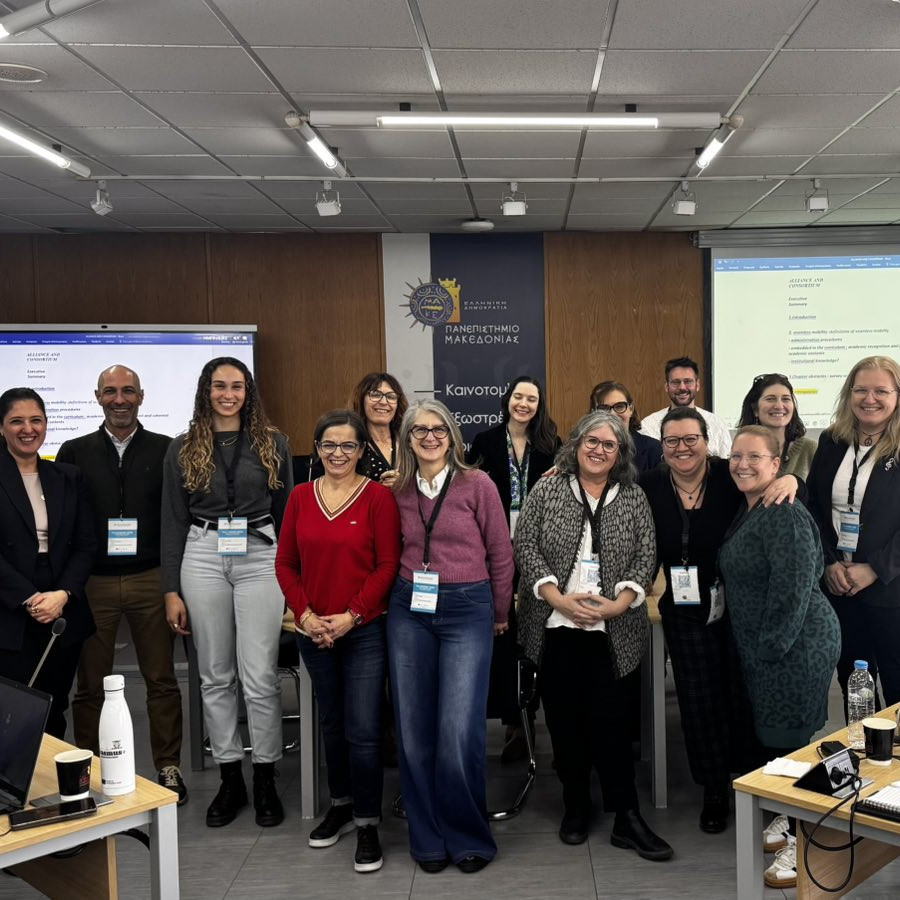
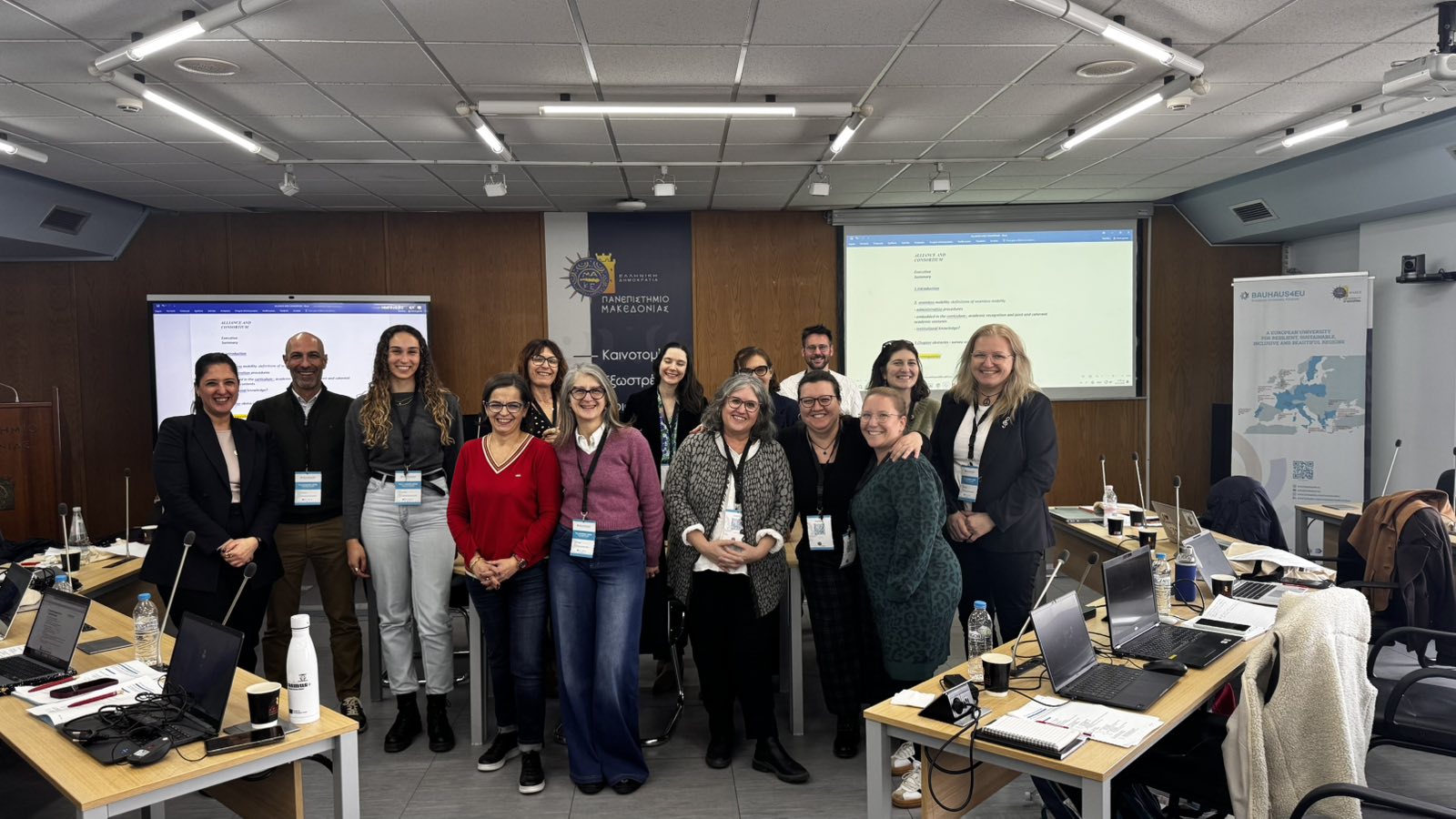
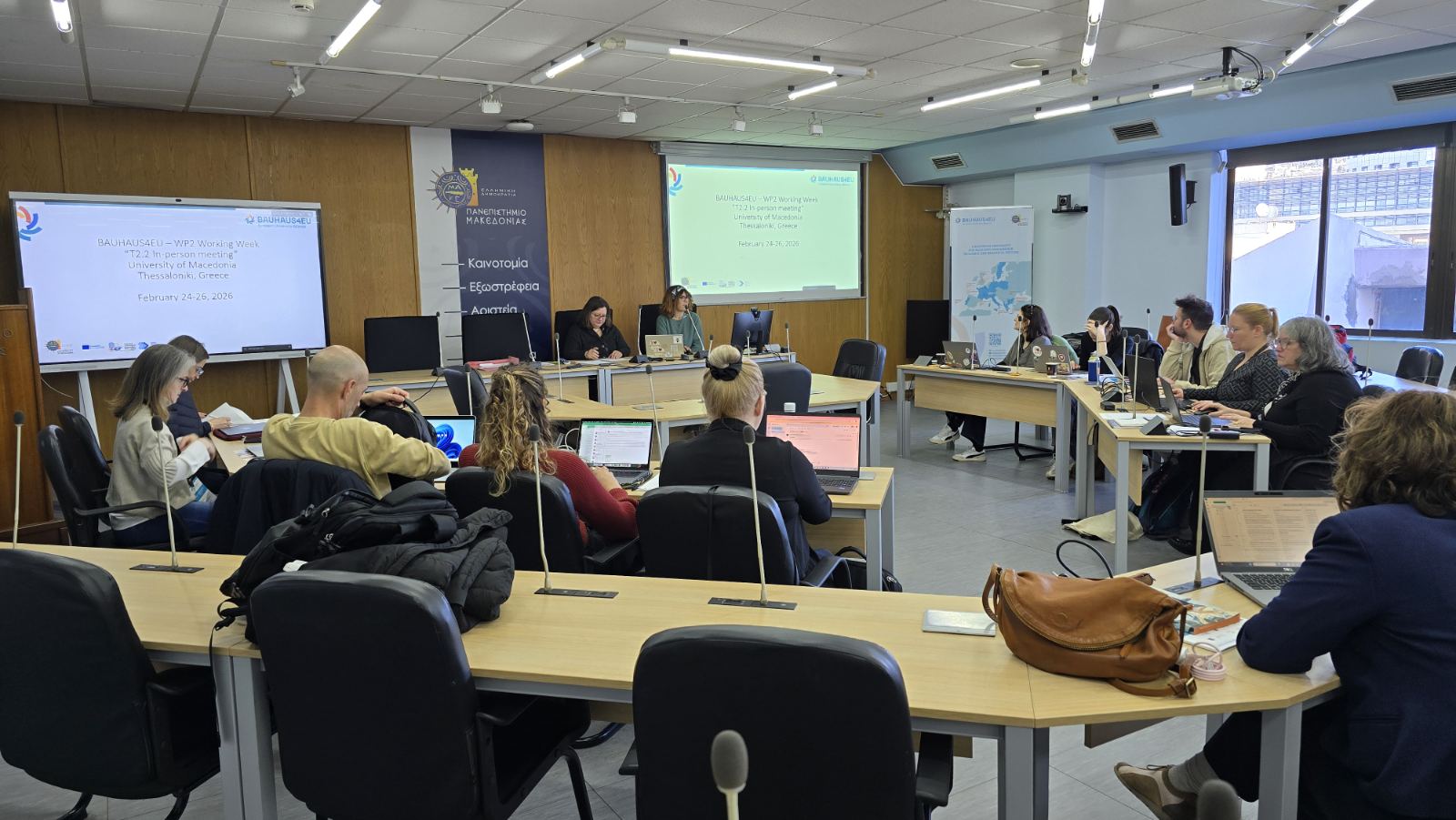
The Working Week brought together representatives of the Alliance to advance key priorities related to seamless and embedded mobility, the development of mobility windows, and the implementation of the European Student Card and associated digital tools. Through structured discussions, collaborative workshops, and joint drafting sessions, participants reviewed survey results, mapped existing practices, assessed interoperability challenges, and identified enabling factors across partner institutions.
A central focus of the meeting was the co-creation of a structured intermediate report, aligning formats, clarifying methodological approaches, and defining actionable next steps. The intensive in-person collaboration allowed partners to harmonise perspectives, refine shared tools, and strengthen coordination within WP2 and across the Alliance.
The WP2 Working Week in Thessaloniki marked an important milestone in enhancing mobility pathways, improving digital interoperability, and fostering coordinated implementation across the Alliance.
Beyond the working sessions, the event fostered meaningful networking and reinforced the spirit of cooperation that underpins BAUHAUS4EU. The outcomes of the Working Week provide a solid foundation for the next phase of WP2 implementation, contributing to the long-term objective of building a more integrated, digitally connected, and student-centred European University Alliance.