Mission & Goals
A European University for Resilient, Inclusive, Sustainable and Beautiful Regions
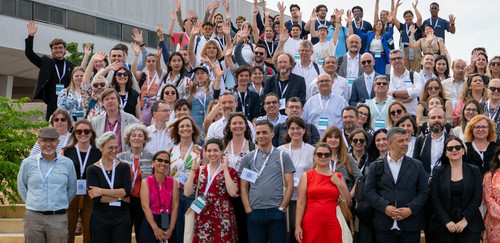
The BAUHAUS4EU Alliance brings together 10 member universities and 67 associated partners from across Europe, forming a shared European campus and a vibrant learning community of 124,000 students and 10,000 staff. Guided by a common strategy, the partner universities are committed to deepening their transnational cooperation through joint educational offers and to fostering a European identity rooted in the principle of unity in diversity. Get to know the Member Universities!
A European University Alliance is a group of universities that agree on a special kind of partnership. The goal of this partnership is to establish particularly far-reaching forms of cooperation and thus building a European campus where all members of the participating universities can move freely and profit from the offers of all universities. Because of this comprehensive transnational collaboration, the Alliances foster European values and identity.
European citizens and regions, particularly those near participating universities, are positively impacted by the alliances’ transformational work. They profit from international learning offers, the strengthening of international ties and the Alliances’ ecosystems which enable innovation, regional development and the sharing of expertise and experiences
Currently, there are 65+ European Universities Alliances encompassing over 570 higher education institutions. The programme is funded by the European Union via Erasmus+.
Regional Focus
Firmly anchored in the UN Sustainable Development Goals, the European Green Deal, and the New European Bauhaus initiative, the Alliance works hand in hand with regional ecosystems to bridge diverse territories, combine strengths, and transform challenges into opportunities for growth. Meet our regional partners!
BAUHAUS4EU sits within the context of the UN’s Sustainable Development Goals, the European Green Deal, the New European Bauhaus Initiative (NEB), in addition to our individual regional challenges. B4EU embraces these common core values of sustainability, aesthetics, and participation in order to benefit European citizens and regions through a strong transnational cooperation scheme and social transformation.
In order to co-create solutions for the transition into a resilient, sustainable, inclusive, and culturally enriching future, 67 regional partners from business, culture and society are engaged to strengthen and create international connections between our regions. This joint effort allows for the exchange of specialised knowledge both between regional partners and the academic sphere in a European Network.
Our Mission
By enhancing employability, promoting lifelong learning, and empowering students and staff to tackle the defining issues of our time, BAUHAUS4EU is pioneering a new model of European higher education — one that strengthens regional ecosystems, sparks innovation, and builds a sustainable future for all.
1. A fully developed joint European campus with joint innovative educational offers and increased mobilities
2. An innovative European university deeply rooted in and contributing to the resilience and sustainability of European regions
3. A European citizen’s institution promoting inclusion, social justice and liberal democracy
4. An internationally attractive Alliance with a sustainable structure ensuring long-term collaboration and training opportunities for all
- Taking responsibility for a sustainable future
- Human-centredness and empathy
- Diversity, inclusion and gender equality
- Being responsible European citizens
- Intercultural competence and multilingualism
- Academic freedom
- Kindness, joy and happiness
All the BAUHAUS4EU stakeholders collaborate in a co-creative approach. Students, PhD students, academics, staff, regional and international partners are empowered to be actors of change. Joint challenge-based education, mobility offerings, intercultural projects and micro-credentials are collaboration formats of the alliance.
Students
Students reap numerous benefits from the project's student-centered approach, capitalizing on various main assets:
The reduction in barriers facilitates improved access to international activities and seamless mobilities. Consequently, students enjoy an enriched opportunity to acquire transversal skills and access a diverse range of learning opportunities that can be seamlessly integrated into their individual learning and career paths. Simultaneously, heightened engagement in international activities contributes significantly to enhancing the internationalization@home dimension for all students. The development of a European identity and an appreciation of European values are woven into the fabric of the educational experience, fostering a sense of unity and shared cultural understanding.
European Joint-degree offerings with an interregional dimension, coupled with interdisciplinary, research-based, and challenge-based learning opportunities, play a pivotal role in shaping students' future skills, intercultural competences, and entrepreneurial mindset. The alliance's inter-regional focus acts as a broad gateway into the entrepreneurial milieus not just of one but ten universities' regional ecosystems. Through collaborative initiatives connecting European and regional stakeholders, students not only develop future skills but also markedly enhance their employability.
Academic Staff
For academic staff, the Alliance offers a transformative landscape providing a host of benefits that invigorateprofessional development and enrich academic experience.
By fostering an environment that emphasizes European values appreciation and identity, the Alliance cultivates a sense of shared purpose among academic staff, creating a united and diverse academic community. Seamless mobilities enable academic staff to engage in cross-cultural experiences and foster a global mindset that enhances teaching and research approaches. The focus on developing transversal and future skills equips academic staff to navigate the evolving educational landscape, positioning them asleaders in innovative teaching methodologies.
The Alliance's commitment to increased internationalization@home facilitates a diverse and inclusive learning environment, exposing academic staff to a broader range of perspectives within their own institutions. Initiatives for further education on a European level empower academic staff to adapt to emerging trends, ensuring their expertise remains relevant. The Alliance opens a greater variety in career paths, allowing academic staff to explore interdisciplinary opportunities and contribute to different facets of the academic ecosystem. Increased participation in international activities broadens professional networks, fosters collaborative partnerships and facilitates the exchange of best practice at European level and beyond. In addition, international collaboration projects in the areas of research, teaching, innovation and service to society provide opportunities for academic staff to contribute to global advances and create a vibrant and impactful academic community within the Alliance.
Administrative Staff
Administrative staff within the Alliance gain manifold benefits that contribute to a vibrant and inclusive professional environment.
The emphasis on European values promotes a sense of unity and shared purpose among administrative staff that contributes to a European identity. Through increased participation in international activities, staff members broaden their horizons, establish diverse professional networks and gain exposure to best practices in Europe, thus enriching their skill set, contributing to efficient and effective administrative processes.
The seamless mobilities facilitated by the Alliance and an intensified internationalisation@home dimension allow administrative staff to engage in cross-cultural experiences, which creates cultural awareness and adds to a more culturally diverse and inclusive administrative atmosphere within the institution. The concomitant opportunities for informal and formalised transversal and future skill development equip administrators with the tools needed to adapt to evolving demands, fostering a resilient and innovative workforce. The initiatives for upskilling and further education offers on an Alliance level facilitate continuous professional growth, allowing administrative staff to stay at the forefront of their roles and contribute meaningfully to the Alliance's objectives.
The exchange of best practices on an interregional and European level provides valuable insights for improved administrative processes. As a result, the Alliance opens doors to better career opportunities, recognizing and rewarding their valuable contributions within the organizational framework.
Regional Partners and Stakeholders
Regional Partners and Stakeholders benefit significantly from the Alliance's close relationship with the regions as it drives social and economic development.
The focus on interdisciplinary and innovative didactics equips graduates with diverse skills that align them with the dynamic needs of regional businesses and organizations. The Alliance's commitment to transversal and future skill development ensures a workforce adept at navigating new challenges and technological advancements, fostering a culture of innovation. The use of challenge and research-based learning at an interregional level not only enhances academic excellence but also contributes to valuable insights and solutions to regional problems.
The Alliance's support for entrepreneurial activities stimulates the local business environment,driving economic growth and job creation. Through initiatives that focus on upskilling and reskilling education and training on an interregional level, the Alliance addresses workforce needs, thus increasing the overall competitiveness of the region. Connecting to the regional labour market improves employability by producing graduates who are attuned to the specific needs of local industries.
Facilitated access to university programmes opens further education opportunities for a wide range of non-traditional students, strengthening the workforce and promoting diversity, which contributes to a more inclusive and representative regional community. Increased participation in international activities broadens regional perspectives and cultivates a globally aware workforce with an appreciation of European values. The exchange of best practices on a European level and beyond ensures that regional stakeholders benefit from the latest advancements in industry standards and innovation. Furthermore, facilitated international collaboration projects in research, teaching, innovation, and service to society create a network that amplifies the impact of regional initiatives on a broader scale.
The Alliance thus serves as a catalyst for regional advancement, fostering a mutually beneficial relationship between academia and regional stakeholders.
Life-Long Learners
Life-long learning means continuing personal and professional development even after all formal education has finished. Everyone can be a life-long learner, regardless of whether they are part of a university or not. BAUHAUS4EU is currently still working on expanding their offer to citizens outside of the Alliance with the goal of providing opportunities for everybody.
Life-long learners will eventually benefit from the availability of an extensive portfolio of upskilling and reskilling learning opportunities made possible by the interlinkage of ten universities. The Alliance facilitates easy access to university programmes, breaking down barriers to education.
Through flexible curricula and learning pathways, learners can customize their educational journey, accommodating their professional and personal commitments. The Alliance fosters interdisciplinary and innovative didactics and promotes challenge- and research-based learning on an interregional level. This approach not only enhances the development of transversal and future skills but also nurtures a European identity and an appreciation for European values.
By increasing internationalisation@home and encouraging participation in international activities, the Alliance broadens horizons and fosters a European and global perspective. In addition, the upskilling and reskilling programmes address the needs of the regions represented in the Alliance. This adds an interregional dimension to the training, connects learners with regional labour markets and improves their employability.
The robust support for entrepreneurial activities the Alliance can provide encourages creativity and innovation among life-long learners. This contributes to their personal and professional growth and enables them to explore a wider variety of career paths.
The Universiteti POLIS (POLIS University), located in Tirana (Albania), is a “Space for Thinking” on spatial development policies, applied design and technology, as well as for leadership and entrepreneurship.
The Universitet po Arhitektura, Stroitelstvo i Geodesiya – UACEG (University of Architecture, Civil Engineering and Geodesy), located in Sofia (Bulgaria), is the leading and oldest technical Bulgarian university in the fields of architecture, civil engineering and geodesy.
The Université Lumière Lyon 2 (Lumière Lyon 2 University) focuses on a strong and rigorous vision of higher education and research, driven by a spirit and values that are also its hallmark: humanist, open and committed.
The Université de Picardie Jules Verne – UPJV (University of Picardie Jules Verne), is a multidisciplinary institution with 20 training centers spanning various fields and has multiple satellite sites that cater to regional needs.
The Bauhaus-Universität Weimar specialises in the artistic and technical fields. With its international, interdisciplinary and project-based approach, the university encourages experimentation and provides a space for creativity.
The Panepietnmio Makedoniae – UoM (University of Macedonia) in Thessaloniki is a modern state Higher Education institution, renowned for the ambience of quality, freedom, democracy, meritocracy and individual development it provides to all its members.
The Università Degli Studi Di Bergamo – UniBg (University of Bergamo) fosters a plural, inclusive environment, focused on community values and open to a global dimension.
The Uniwersytet Ekonomiczny w Katowicach – UEKat (University of Economics in Katowice) is a leading public economic institution in Poland, boasting a rich history as the largest and oldest business school in the Silesia region.
The Instituto Politécnico de Castelo Branco - IPCB (Polytechnic University of Castelo Branco) is a public higher education institution, with an important role in the region's growth, actively contributing to regional development and improving the city's quality of life."
The Blekinge Tekniska Högskola – BTH (Blekinge Institute of Technology) has a distinctive focus on the digitalization of society and sustainability, and the research is often conducted in collaboration with industry, public authorities, and civil society."
How do we Accomplish This?
There certainly is a lot to do! Therefore, we have eleven work package groups encompassing 35 task groups dedicated to specific objectives of the alliance. These Operative Bodies are being guided by the Strategic Bodies of the alliance.
Learn more about our Strategic and Operative Bodies here: Meet the Team

Stay Tuned!
Listen to our BAUHAUS4EU Podcast and sign up for our newsletter – stay up to date on all of our ongoing developments and planned activities!
Download Area
In the Download Area, you can find our communication kit, logos, deliverables and other useful documents.